- What Is the Income Statement?
- Why Is the Income Statement Important for a Business?
- What Are the Main Components of an Income Statement?
- What Is the Difference Between Revenue Gross Profit and Net Income?
- How Do You Prepare an Income Statement?
- How Does the Income Statement Help Management Make Better Decisions?
- How Should Businesses Analyze an Income Statement?
- What Is the Role of the Income Statement in Different Industries?
- Income Statements for Service Businesses
- Income Statements for Manufacturing Companies
- Income Statements for Trading and Distribution Companies
- Income Statements for Healthcare Companies
- Income Statements for F&B Hospitality Companies
- Income Statements for Construction Companies
- What Common Mistakes Affect Income Statement Accuracy?
- How Does an ERP System Improve Income Statement Reporting?
- How Can Manzuma AI Help Businesses Monitor Income Statement Performance?
- How Can ERP Data Make Income Statement Analysis Faster?
- What Is the Difference Between Profit and Cash Flow?
- How Often Should a Company Review Its Income Statement?
- What Questions Should Management Ask When Reviewing an Income Statement?
- FAQs
- What is the income statement in simple terms?
- What does an income statement show?
- What are the main parts of an income statement?
- Is revenue the same as profit?
- Can an income statement show whether a company has cash?
- How does ERP help with income statement reporting?
- Why is the income statement important for business owners?
When business owners look at their financial reports one question usually comes first Is the business actually making money? The income statement provides the clearest answer by organizing revenue costs expenses and profit or loss for a specific period But its value goes beyond reporting a final number A well-prepared income statement helps management understand where revenue comes from what is driving costs and whether business performance is improving With an integrated ERP system these insights can become faster more consistent and easier to act on
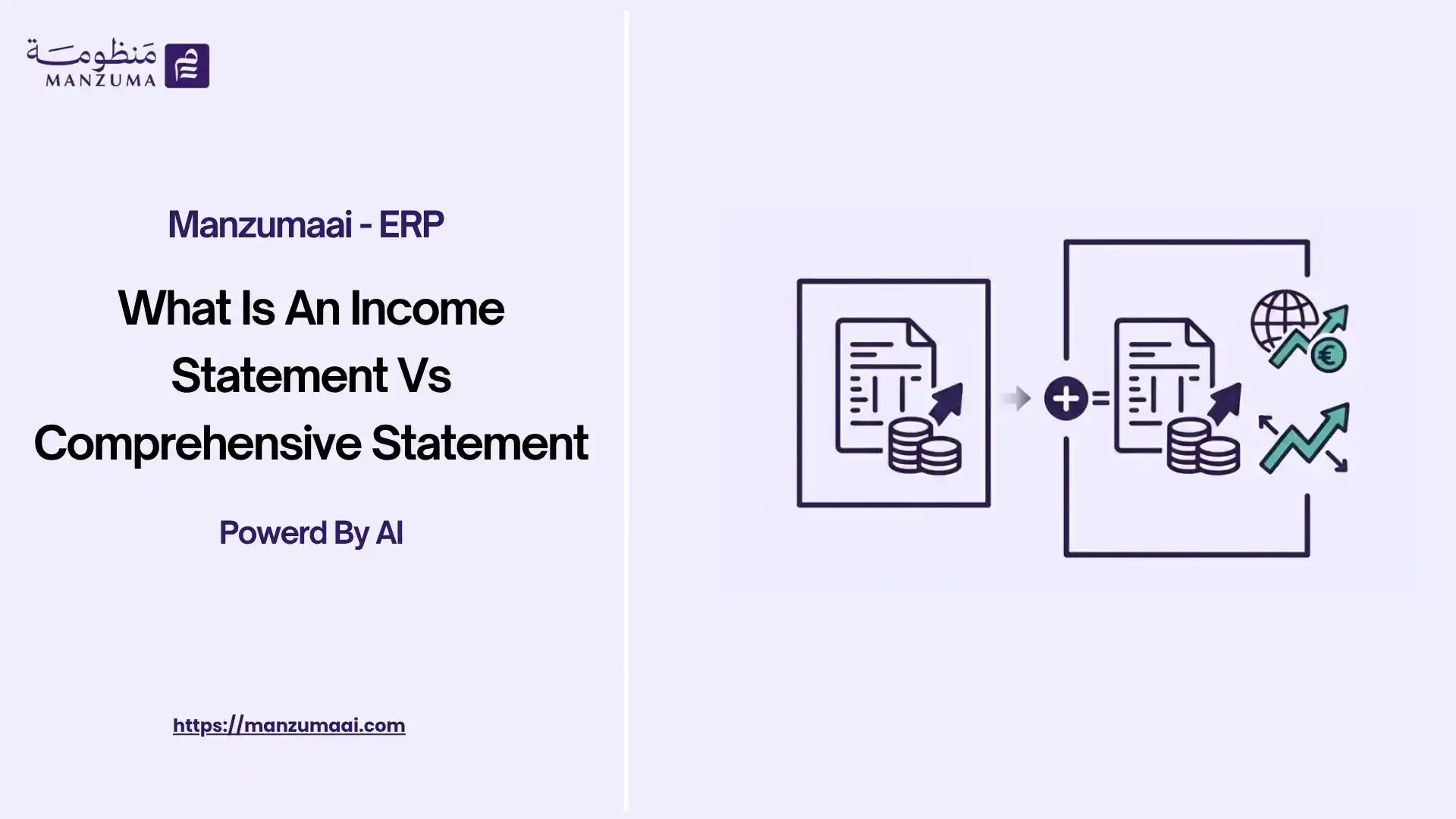
What Is the Income Statement?
An income statement is a financial statement that summarizes a company’s revenues expenses gains and losses over a defined accounting period Its primary purpose is to show the financial result of business operations—whether the company generated a net profit or a net loss
Unlike reports that focus on what a company owns or owes at a specific date the income statement focuses on financial performance over a period of time Depending on the business it may be prepared monthly quarterly or annually
For management the income statement turns accounting transactions into a practical view of business performance It can reveal whether sales are growing whether operating costs are under control and which areas of the business are putting pressure on profitability
Key takeaway The income statement does not simply tell you how much money the business made It helps explain how that result was achieved
Why Is the Income Statement Important for a Business?
A business can generate strong sales and still struggle with profitability if costs and expenses grow faster than revenue The income statement helps management identify this gap before it becomes a larger operational problem
Businesses use the statement to:
- Measure profitability
- Track revenue growth
- Monitor operating expenses
- Evaluate gross and operating margins
- Identify cost increases
- Support budgeting and forecasting
- Assess the performance of products or services
- Provide financial information for management decisions
- Support communication with investors lenders and other stakeholders
For growing businesses regular income statement analysis can also help management identify trends rather than relying on isolated financial figures
In short Revenue tells you how much the business generated; the income statement helps you understand what remained after the costs of generating that revenue
What Are the Main Components of an Income Statement?
Although the exact presentation can vary by business and accounting framework most income statements contain several core categories
| Componen | What It Shows | Typical Examples |
| Revenue | Income generated from the main business activities | Product sales service revenue |
| Cost of Sales | Direct costs associated with generating revenue | Materials purchased goods |
| Gross Profit | Revenue remaining after direct costs | Revenue − Cost of Sales |
| Operating Expenses | Costs required to operate the business | Salaries rent marketing |
| Operating Income | Profit generated from core operations | Gross Profit − Operating Expenses |
| Other Income/Expenses | Items outside core operating activities | Interest income finance costs |
| Taxes | Income tax expense where applicable | Corporate income tax |
| Net Income | Final profit or loss for the period | Income after expenses and taxes |
The level of detail can be expanded depending on the company’s reporting requirements and management needs
Best ERP For Preparing Income Statement
How Is Net Income Calculated?
At a basic level net income represents the amount remaining after the company accounts for its expenses and other applicable items
A simplified calculation is
Net Income = Total Revenue − Total Expenses
For a company that separately presents cost of sales
Gross Profit = Revenue − Cost of Sales
Then
Operating Income = Gross Profit − Operating Expenses
Finally after considering applicable non-operating items and taxes
Net Income = Operating Income + Other Income − Other Expenses − Taxes
The actual presentation and treatment of individual items depend on the company’s accounting policies and applicable accounting standards
Professional tip Do not judge profitability from revenue alone Always examine revenue alongside cost of sales operating expenses and the resulting margins
What Is the Difference Between Revenue Gross Profit and Net Income?
These figures answer different questions about business performance
- Revenue How much income did the company generate from its activities?
- Gross profit How much remains after deducting the direct costs associated with generating that revenue?
- Net income What remains after accounting for operating expenses and other applicable income expenses and taxes?
For example a company may increase revenue significantly while seeing little improvement in net income because operating expenses or direct costs have increased
The important point Strong revenue growth does not automatically mean stronger profitability
How Do You Prepare an Income Statement?
Preparing an income statement requires more than simply adding sales and subtracting expenses The underlying accounting records must first be complete accurate and properly classified
A practical process includes:
Define the Reporting Period
Determine whether the statement will cover a month quarter year or another reporting period
Collect Revenue Data
Gather relevant sales and service revenue recorded during the period and ensure transactions are recognized according to the applicable accounting policies
Determine the Cost of Sales
Identify the direct costs associated with the products or services generating revenue
Calculate Gross Profit
Subtract the cost of sales from revenue
Record Operating Expenses
Include relevant operating expenses such as payroll rent utilities marketing administrative expenses and other business costs
Account for Other Income and Expenses
Include applicable items such as finance income interest expense or other non-operating transactions
Record Applicable Taxes
Recognize income tax expense according to the applicable accounting requirements
Calculate Net Income or Loss
Determine the final financial result for the reporting period
Review and Reconcile the Data
Before issuing the statement review account balances adjustments accruals classifications and other relevant accounting entries
Important A mathematically correct report can still contain accounting errors if transactions were recorded in the wrong accounts or period
How Does the Income Statement Help Management Make Better Decisions?
The real value of an income statement appears when management uses it to answer practical business questions
For example:
- Are sales growing at a healthy rate?
- Which expenses are increasing fastest?
- Is the gross margin improving?
- Are operating costs consuming too much revenue?
- Is a product service or business unit generating an acceptable return?
- Are recent price changes improving profitability?
- Is the company operating efficiently?
Management can also compare current results with previous periods budgets or internal targets to identify meaningful trends
A useful approach is to analyze the statement from three angles
Revenue What is driving growth?
Costs Where is the business spending more?
Profitability Is the additional revenue translating into stronger margins?
This approach turns financial reporting into a decision-making tool rather than a routine accounting exercise
How Should Businesses Analyze an Income Statement?
Reading an income statement effectively means looking beyond the final profit figure
Key indicators include
- Revenue growth
- Gross profit margin
- Operating profit margin
- Net profit margin
- Cost of sales as a percentage of revenue
- Operating expenses as a percentage of revenue
- Changes in major expense categories
- Profitability trends over multiple periods
For example if revenue increases by 15% but operating expenses increase by 25% management should investigate why costs are growing faster than sales
Quick insight Always analyze trends and relationships between line items instead of focusing on a single number
What Is the Role of the Income Statement in Different Industries?
The structure and priorities of an income statement can vary depending on the business model
Income Statements for Service Businesses
Service industry often focus on:
- Service revenue
- Employee and contractor costs
- Project-related expenses
- Administrative expenses
- Marketing expenses
- Operating margins
- Project or service profitability
For professional services monitoring labor utilization and project costs can be particularly important because employee time may represent a significant portion of the cost base
Income Statements for Manufacturing Companies
Manufacturers typically need deeper visibility into
- Product sales
- Raw material costs
- Direct labor
- Manufacturing overhead
- Cost of production
- Cost of goods sold
- Inventory-related accounting
- Product margins
An integrated system can help connect production activity inventory movements purchasing and accounting data to improve financial visibility
Income Statements for Trading and Distribution Companies
Trading industry often pay close attention to
- Sales revenue
- Cost of goods sold
- Gross margin
- Discounts and returns
- Inventory-related costs
- Distribution expenses
- Customer profitability
Because inventory and purchasing directly affect profitability financial reporting is more useful when sales inventory purchasing and accounting data are connected
Income Statements for Healthcare Companies
Healthcare industry may need to monitor
- Medical service revenue
- Patient and insurance revenue
- Medical supplies
- Medical equipment costs
- Direct labor
- Staff and physician costs
- Operating expenses
- Department profitability
Service-level financial visibility can help management understand the profitability of different medical services and departments while monitoring operating costs and overall financial performance.
Income Statements for F&B Hospitality Companies
F&B and hospitality industry may need to monitor
- Food and beverage revenue
- Food costs
- Beverage costs
- Direct labor
- Inventory and purchasing costs
- Restaurant or branch overhead
- Operating expenses
- Branch profitability
Branch-level financial visibility can help management identify high operating costs, monitor food and beverage margins, and understand whether individual locations are achieving the expected profitability.
Income Statements for Construction Companies
Construction industry may need to monitor
- Contract revenue
- Project costs
- Direct labor
- Materials
- Subcontractor costs
- Project overhead
- Project profitability
- Administrative expenses
Project-level financial visibility can help management identify cost overruns and understand whether individual projects are delivering the expected margins
What Common Mistakes Affect Income Statement Accuracy?
Even when a business uses accounting software poor processes can lead to inaccurate financial reporting
Common issues include:
- Recording revenue in the wrong accounting period
- Misclassifying expenses
- Failing to record accrued expenses
- Incorrect treatment of inventory-related costs
- Missing transactions
- Duplicate entries
- Incomplete account reconciliations
- Using outdated data
- Confusing accounting profit with cash available in the bank
Professional warning A profitable income statement does not necessarily mean the company has sufficient cash Profitability and liquidity are related but distinct financial concepts
How Does an ERP System Improve Income Statement Reporting?
Traditional reporting becomes increasingly difficult when sales purchasing inventory payroll customer accounts and accounting are managed through disconnected systems
An ERP system can bring these processes together so that financial data is generated from connected business transactions
For example
Sales Order → Delivery → Invoice → Customer Balance → Accounting Entry → Financial Report
Similarly
Purchase Order → Receipt → Supplier Invoice → Inventory → Accounts Payable → Financial Report
This connected flow reduces repetitive data entry and gives finance teams a more consistent source of information
How Can Manzuma AI Help Businesses Monitor Income Statement Performance?
Manzuma AI can support businesses by bringing core operational and financial processes into an integrated ERP environment
Depending on business requirements an integrated platform can connect
Accounting and finance
- Sales
- Purchasing
- Inventory and warehouses
- Customers and suppliers
- Human resources and payroll
- Projects
- Manufacturing
- Fixed assets
- Financial reports and analytics
The benefit is not simply having more modules The real value comes from connecting the data generated by those modules so that management can work with a more complete picture of business performance
How Can ERP Data Make Income Statement Analysis Faster?
With integrated ERP data financial teams can spend less time collecting information from separate files and more time analyzing what the numbers mean
A connected system can help management
- Access updated financial information
- Track revenue and expenses
- Review customer and supplier balances
- Connect sales with accounting
- Connect purchasing with inventory
- Monitor operational costs
- Generate financial reports more efficiently
- Support faster management decisions
The goal is simple turn financial data into usable business insight without relying on fragmented spreadsheets and repeated manual consolidation
What Is the Difference Between Profit and Cash Flow?
Profit and cash flow should not be treated as interchangeable concepts
A company may record revenue from a sale while the customer has not yet paid The transaction can contribute to reported revenue and profit while the cash has not yet entered the company’s bank account
Likewise a company may have significant cash movements that do not directly represent operating profit
For this reason management should review the income statement alongside other financial reports when evaluating the company’s overall financial position
How Often Should a Company Review Its Income Statement?
The ideal reporting frequency depends on the company’s size transaction volume industry and management requirements
Many businesses benefit from
- Monthly reviews for routine management control
- Quarterly reviews for broader performance analysis
- Annual reporting for year-end financial reporting and strategic planning
Businesses with high transaction volumes or rapidly changing operations may require more frequent internal monitoring
Best practice The faster management receives reliable financial information the sooner it can investigate unfavorable trends and respond
What Questions Should Management Ask When Reviewing an Income Statement?
A useful management review should go beyond asking Did we make a profit?
Instead ask:
- What drove the change in revenue?
- Which costs increased?
- Did gross margin improve or decline?
- Which products or services are most profitable?
- Are operating expenses growing faster than revenue?
- Are there unusual or one-time expenses?
- How does current performance compare with the budget?
- What actions should management take based on the results?
These questions transform the income statement from a static report into a practical management tool
The income statement is more than a year-end accounting document It gives business leaders a structured view of revenue costs expenses and profitability helping them understand what is really happening inside the business When financial data is connected to sales purchasing inventory projects and other operations through an ERP system reporting becomes more actionable With integrated ERP capabilities businesses can move from simply recording financial results to continuously understanding performance and making faster better-informed decisions
FAQs
What is the income statement in simple terms?
The income statement is a financial report that summarizes a company’s revenue expenses and resulting profit or loss over a specific period
What does an income statement show?
It shows the financial performance of a business during a defined period including revenue costs expenses and the resulting profit or loss
What are the main parts of an income statement?
The main components generally include revenue cost of sales gross profit operating expenses operating income other income and expenses taxes and net income or loss
Is revenue the same as profit?
No Revenue represents income generated by the business while profit is what remains after the applicable costs and expenses are deducted
Can an income statement show whether a company has cash?
Not by itself The income statement measures financial performance while cash availability is assessed through cash flow information and other financial data
How does ERP help with income statement reporting?
ERP systems can connect transactions from sales purchasing inventory payroll and other business processes with accounting records making financial reporting more integrated and efficient
Why is the income statement important for business owners?
It helps owners understand profitability identify cost pressures monitor financial trends and make better decisions about pricing spending growth and operations
Ready to Organize Your Business?
Try Manzuma free for 14 days — no credit card, no commitment.