Choosing an ERP system does not start with the question, “What is the best software?” but with a more important question: How does your company operate today, and where is it heading tomorrow? A company managing multiple branches and requiring continuous access to its data may have different needs from a business with a strong internal IT infrastructure. Understanding the different types of ERP systems and how each type is deployed can therefore help you make a decision based on your business model, number of users, branches, security requirements, and expected growth.
What Are the Types of ERP Systems Based on Deployment and Hosting?
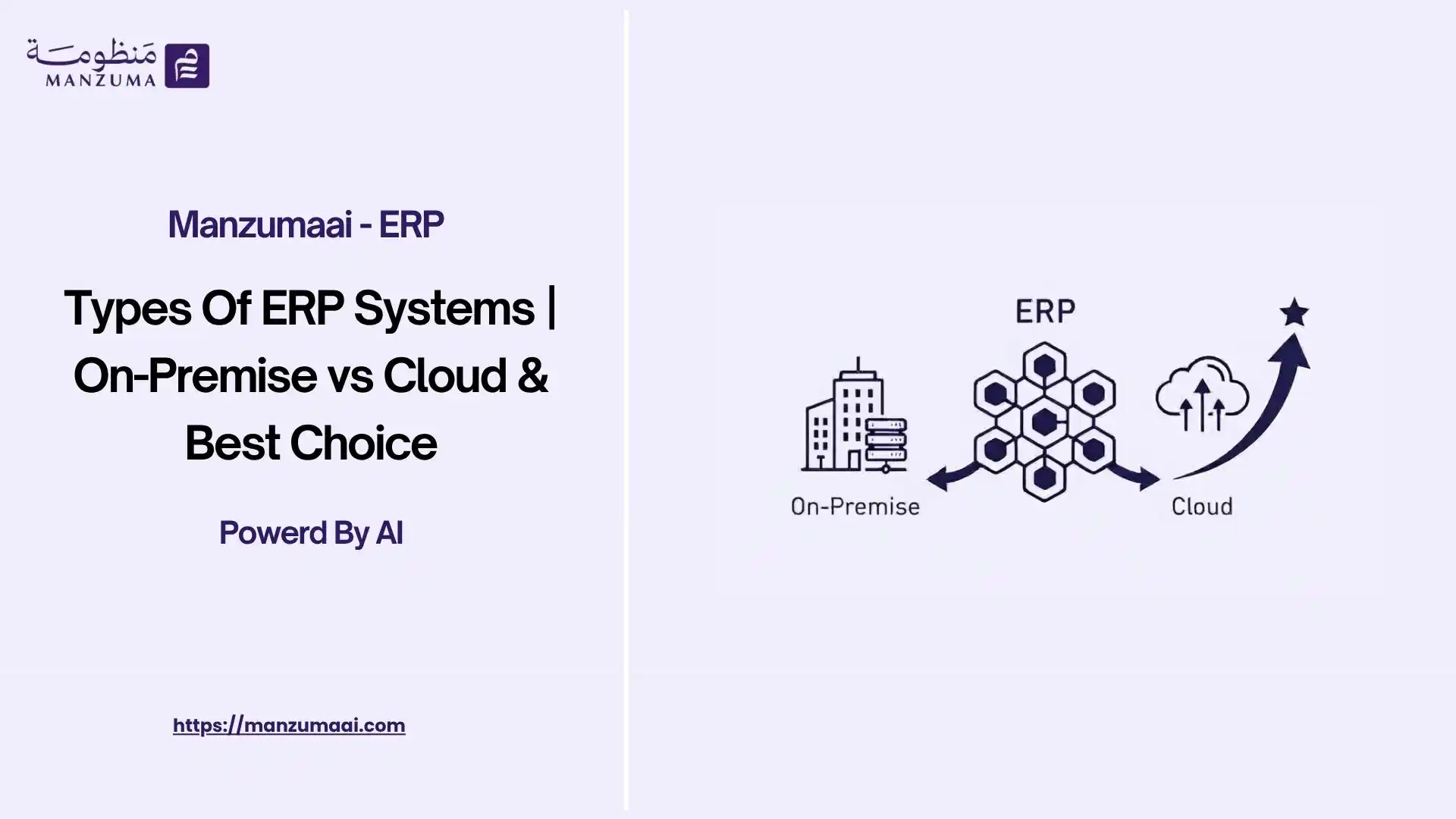
When researching ERP system types, one of the most important classifications is based on how the system is hosted and operated. There are three main models: Cloud ERP, On-Premise ERP, and Hybrid ERP.
What Is Cloud ERP, and How Does a Company Use It?
Cloud ERP operates over the internet, with the system’s technical infrastructure hosted outside the company’s premises. Users access the system according to their assigned permissions. This model is suitable for businesses that need to access their data from different locations or devices without managing the system’s servers internally.
According to the available official information about Manzuma AI, the platform is a cloud-based ERP system powered by artificial intelligence. It can be accessed from computers or mobile devices and brings sales, invoicing, accounting, inventory, and human resources together within one integrated system.
What Is On-Premise ERP, and How Is It Operated Within a Company?
An On-Premise ERP system relies on hosting the software and its infrastructure within the company’s own premises. This means the organization takes greater responsibility for servers, maintenance, updates, backups, and managing the technical environment.
This model may be suitable for certain organizations with specific technical requirements or internal policies that require their systems to be hosted within their own infrastructure.
Ready to Organize Your Business?
Try Manzuma free for 14 days — no credit card, no commitment.