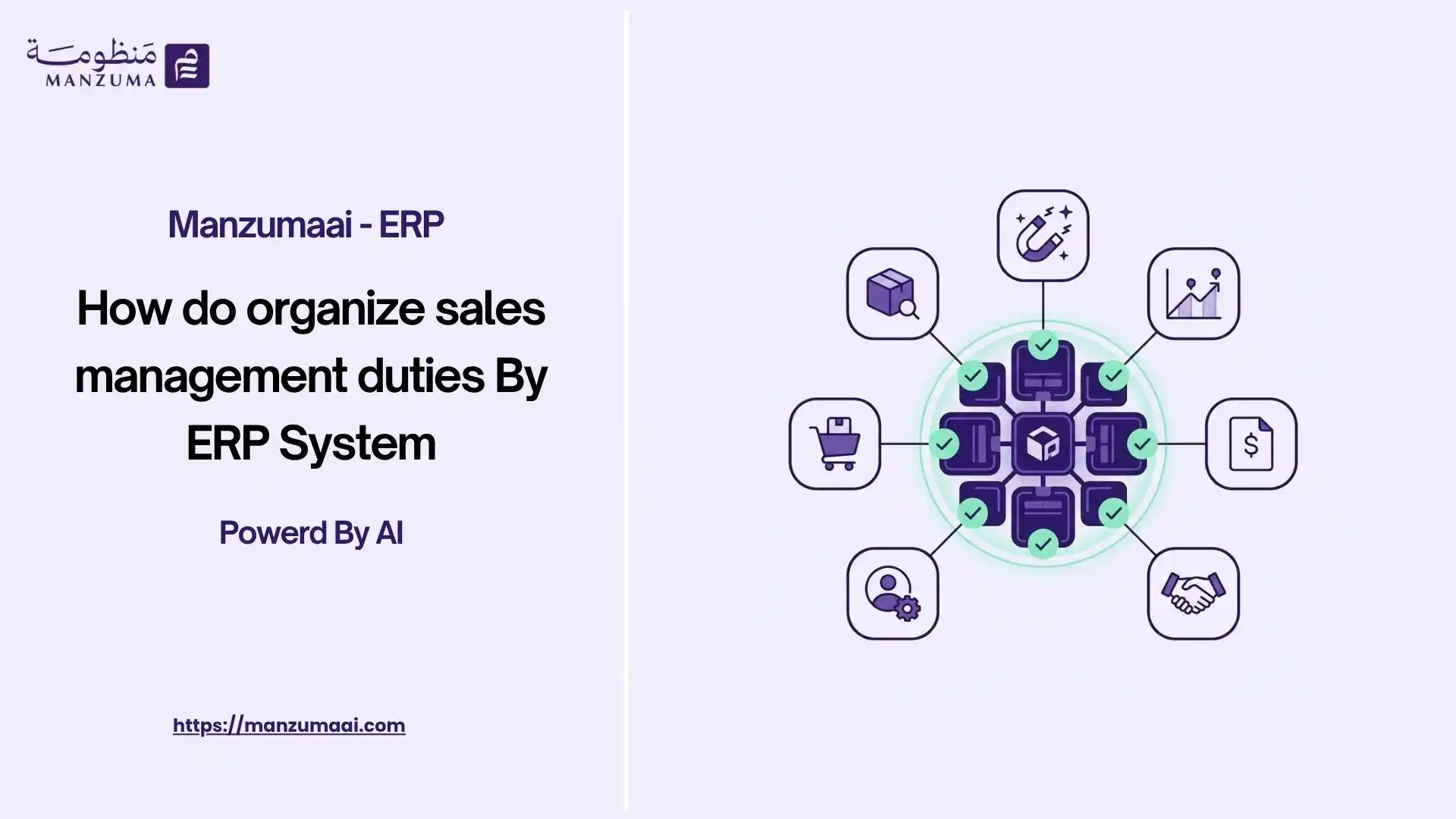
The role of a sales manager is no longer limited to tracking numbers or directing sales representatives. With multiple customers, opportunities, quotations, and invoices to manage, sales managers need a clear view of what is happening at every stage of the sales cycle. This is where an ERP system can help by bringing sales, customer, inventory, invoicing, and reporting data together in one connected environment. The value of this integration becomes even greater when sales managers can quickly access and analyze the information they need instead of relying on scattered files or manually prepared reports.
What Are the Responsibilities of a Sales Manager Within a Company?
A sales manager is responsible for turning the company’s sales goals into measurable results while managing the sales team, customers, opportunities, and the entire sales cycle from the initial contact through closing the deal and collecting payment.
The exact responsibilities vary depending on the nature of the business, but the main duties typically include:
-
Setting sales targets and monitoring their achievement
-
Managing the sales team and assigning responsibilities
-
Following up with existing and potential customers
-
Managing sales opportunities
-
Reviewing quotations and sales orders
-
Following up on invoices and payments
-
Analyzing sales performance
-
Identifying the products or services generating the most revenue
-
Identifying the reasons behind declining performance
-
Developing plans to improve sales and profitability
Ready to Organize Your Business?
Try Manzuma free for 14 days — no credit card, no commitment.