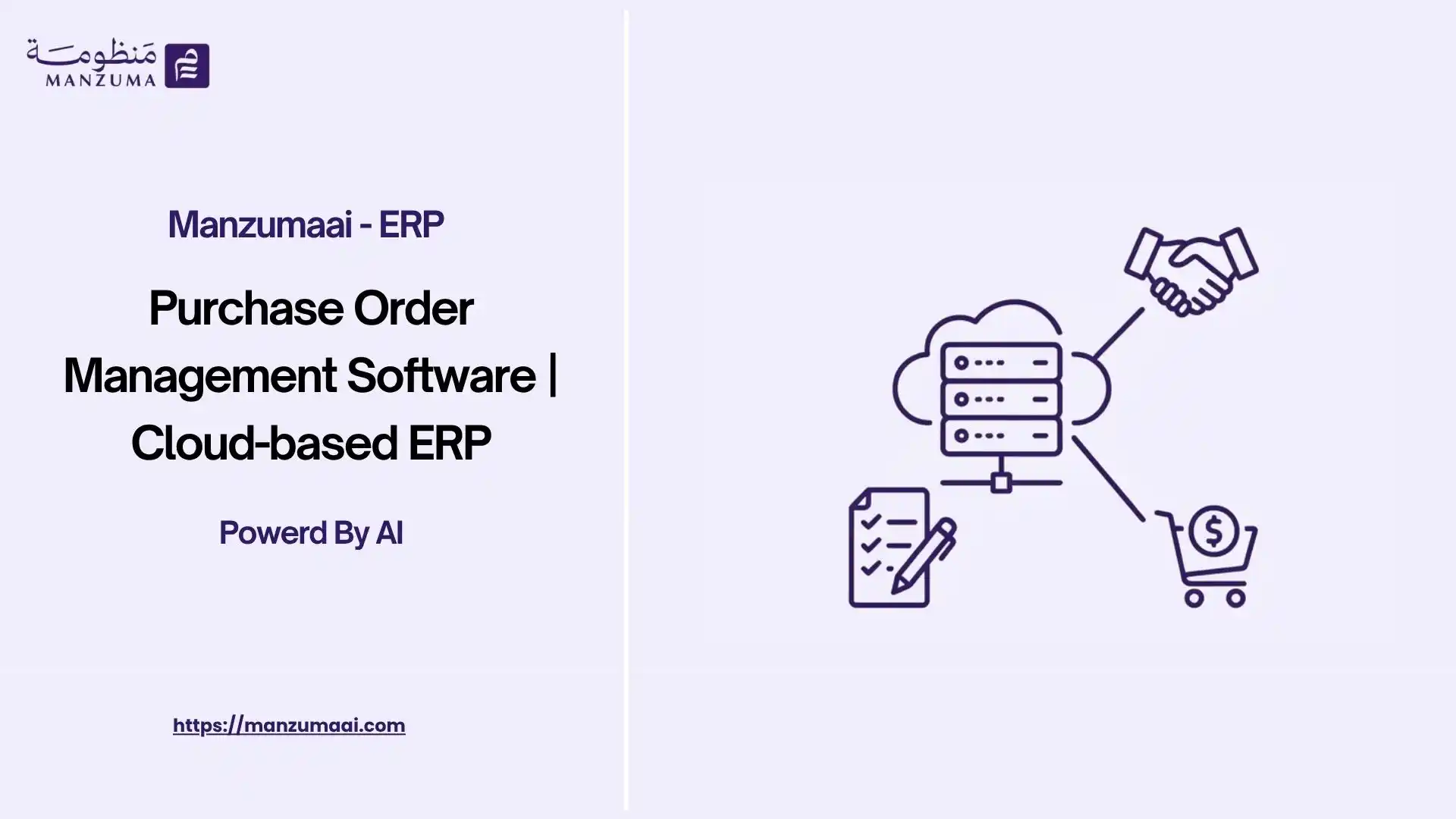
- What Is Purchase Order Management Software?
- The key value is not simply creating a purchase request
- Why Do Businesses Need Purchase Order Management Software?
- How Does a Purchase Request Move Through the Approval Workflow?
- Purchase Request vs Purchase Order What Is the Difference?
- How Does ERP Connect Purchase Requests and Purchase Orders?
- What Is the Difference Between a Purchase Request، Purchase Order، and Supplier Invoice?
- Get Best ERP System
- Why Choose Cloud ERP for Purchase Order Management?
- The Important Point About Cloud ERP
- How Does Manzuma AI Help Organize the Procurement Cycle?
- What Can You Manage With Manzuma's Cloud ERP?
- How Can Your Business Start Using Purchase Order Management Software?
- What Should You Look for in Purchase Order Management Software?
- How Does Integrated Purchase Management Improve Procurement Visibility?
- Which Industries Does Manzuma AI Serve?
- Why Use Manzuma as Your Purchase Order Management Solution?
- Ready to Organize Your Procurement Workflow?
- FAQs
- What is Purchase Order Management Software?
- What is the difference between a purchase request and a purchase order?
- Can purchase order software integrate with inventory?
- Why use cloud ERP for procurement?
- Is purchase order management part of ERP?
As a business grows، a simple request for a product or service can quickly turn into a complicated procurement process Emails، spreadsheets، approval messages، supplier details، and invoices can make it difficult to know what was requested، who approved it، and whether the purchase has been completed
This is where Purchase Order Management Software becomes valuable Instead of managing purchasing requests across disconnected tools، businesses can organize procurement workflows، approvals، purchase orders، inventory، supplier transactions، and accounting within a connected ERP environment
For companies looking to improve purchasing visibility and reduce manual work، an integrated cloud ERP provides a more structured way to manage the entire procurement cycle
What Is Purchase Order Management Software?
Purchase Order Management Software is a business system designed to organize and track purchasing activities from the initial internal request through approval، purchase order creation، receiving، supplier invoicing، and financial recording
Rather than keeping purchase requests in emails or spreadsheets، the system creates a structured workflow where purchasing information can be recorded، reviewed، approved، and tracked
When purchase order management is part of a broader cloud ERP system، procurement does not operate as an isolated function Purchasing can be connected with inventory، supplier accounts، expenses، and accounting، allowing relevant data to move between related processes without unnecessary duplicate entry
The key value is not simply creating a purchase request
It is connecting that request to the rest of the procurement workflow so the business can track what was requested، what was approved، what was ordered، what was received، and what was financially recorded
Why Do Businesses Need Purchase Order Management Software?
As purchasing volume increases، manual procurement processes become harder to control
A growing company may have multiple departments requesting products، several employees approving purchases، numerous suppliers، multiple warehouses، and recurring expenses Without a centralized workflow، procurement teams can spend significant time checking emails، updating spreadsheets، and confirming the status of individual requests
A structured purchase management system can help businesses
- Organize purchase requests in a defined workflow
- Track the status of each request and purchase order
- Reduce repetitive data entry
- Connect procurement with inventory management
- Improve visibility into purchasing commitments and expenses
- Make purchasing information easier to access and report on
- Support internal controls through permissions and approval workflows
- Maintain a clearer audit trail across procurement activities
Professional Tip
Do not evaluate purchase order software as a standalone tool
The more important question is whether it can support the entire procure-to-pay process، from identifying a business need to purchasing، receiving، supplier invoicing، and accounting
How Does a Purchase Request Move Through the Approval Workflow?
Every organization can have its own procurement policies، but a typical purchase workflow may include several connected stages
Identify the Business Need
A department identifies a required product، material، service، or other business expense and specifies the required quantity or details
Create the Purchase Request
The request is entered into the system with the information required for review، such as the requested item، quantity، department، and supporting details
Review the Request
The responsible manager or procurement team reviews the request to confirm that the requirement is valid and properly documented
Approve the Purchase
The request follows the company's defined approval hierarchy Approval rules may depend on factors such as department، purchase type، or transaction value
Convert the Approved Request Into a Purchasing Action
Once approved، the request can move into the next stage of procurement، such as supplier selection or purchase order creation، depending on the company's workflow
Track Procurement Execution
The purchasing team can then follow the order through supplier fulfillment، receiving، e-invoicing، and financial processing
This approach keeps the procurement process visible without eliminating human oversight
Important Approval workflows should reflect the company's actual purchasing policies There is no universal approval structure that fits every business
Purchase Request vs Purchase Order What Is the Difference?
Purchase requests and purchase orders are closely related، but they serve different purposes
A purchase request represents an internal business need It tells the organization that a department or employee needs a particular product or service
A purchase order، on the other hand، is a formal purchasing document issued to a supplier after the purchase has been authorized according to the company's procedures
The distinction becomes especially important when procurement volume grows because it separates the internal decision to purchase from the external execution of that purchase
A typical procurement flow looks like this
Business Need → Purchase Request → Approval → Purchase Order → Receipt → Supplier Invoice → Accounting
This structure creates a clearer connection between the original requirement and the financial transaction that follows
How Does ERP Connect Purchase Requests and Purchase Orders?
This is one of the main advantages of managing procurement through an ERP platform rather than treating each purchasing document as a separate file
The purchase request represents the internal requirement، while the purchase order represents the authorized purchasing action directed to the supplier
When these stages are connected، purchasing teams can more easily determine where an order originated and what happened after approval
A connected procurement workflow can extend from
- Identifying the requirement
- Creating a purchase request
- Reviewing and approving the request
- Creating a purchase order
- Receiving purchased products
- Recording the supplier invoice
- Updating inventory where applicable
- Recording the financial transaction
This creates a more complete procurement trail and reduces the disconnect between purchasing decisions and their financial or operational impact
Key Takeaway
The real benefit of connecting purchase requests and purchase orders is traceability Teams can follow the transaction from the original business need to the completed purchase
What Is the Difference Between a Purchase Request، Purchase Order، and Supplier Invoice?
Get Best ERP System
These documents are part of the same procurement cycle، but they are not interchangeable
| Document | Primary Purpose | Typical Stage |
| Purchase Request | Records an internal need for a product or service | Beginning of the procurement process |
| Purchase Order | Formalizes an authorized purchase with the supplier | After the purchase is approved |
| Supplier Invoice | Records the amount the business owes the supplier | After the supplier issues an invoice |
Understanding these distinctions helps businesses design clearer procurement workflows and establish appropriate approval and accounting controls
Important The exact sequence can vary depending on the company's purchasing policy، industry، and ERP configuration
Why Choose Cloud ERP for Purchase Order Management?
Cloud ERP changes more than how users access business software It provides a centralized environment where operational and financial processes can work from connected data
With a cloud-based ERP، purchasing information can be linked to inventory، suppliers، expenses، accounting، and other business functions instead of being maintained across disconnected applications
For growing companies، this can help create a more consistent source of operational information
Key benefits include:
- Centralized access to procurement information
- Connected purchasing، inventory، and accounting data
- Less dependence on separate spreadsheets and files
- Better visibility across departments
- Easier monitoring of procurement activities
- More consistent data across related business processes
- A scalable environment for growing operations
The Important Point About Cloud ERP
Cloud technology is not valuable simply because users can access software online
The bigger advantage comes from having connected processes and centralized business data within the same ERP environmen
How Does Manzuma AI Help Organize the Procurement Cycle?
With Manzuma AI، purchasing is part of a broader ERP environment rather than a standalone purchase request tool
The platform brings together business functions such as purchasing and expenses، inventory and warehouses، accounting and reporting، along with other core ERP operations
This integration can support procurement processes involving
- Purchase order management
- Purchasing and expenses
- Supplier account management
- Inventory and warehouse operations
- Accounting
- Financial reporting
- Operational reporting
When procurement data is connected to inventory and accounting، businesses can gain better visibility into purchasing commitments، supplier transactions، inventory movements، and related financial information
A Practical ERP Principle
The more closely purchasing، inventory، suppliers، and accounting are connected، the easier it becomes to understand the operational and financial impact of a purchase
What Can You Manage With Manzuma's Cloud ERP?
Purchase order management is only one part of an integrated ERP environment
Manzuma brings multiple business functions together so companies can manage related processes through a unified platform
| Business Area | What It Covers |
| Sales & Invoicing | Sales transactions and invoicing |
| Purchasing & Expenses | Procurement activities and business expenses |
| Inventory & Warehouses | Stock levels، items، and warehouse operations |
| Accounting & Reporting | Financial data and business reports |
| HR & Payroll | Employee and payroll management |
| Manufacturing & Quality | Production and quality-related processes |
| CRM | Customer and opportunity management |
| Reports & Analytics | Operational and financial insights |
The objective of an integrated ERP is to reduce data fragmentation and allow different departments to work with connected information
How Can Your Business Start Using Purchase Order Management Software?
Implementing purchase order management does not have to mean changing every procurement process at once
A more practical approach is to first understand how purchasing currently works and then configure the ERP workflow around the company's actual requirements
Follow These Steps:
Map the Current Procurement Process
Document how purchase requests are currently created، reviewed، approved، ordered، received، and recorded
Define Approval Levels
Determine who can approve purchases and whether approval requirements change based on purchase value، department، or transaction type
Standardize Item and Supplier Data
Clean and organize product، service، supplier، and warehouse information before moving heavily into the new workflow
Connect Purchasing With Inventory
For stock-related purchases، ensure purchasing activities can work alongside inventory and warehouse processes
Connect Procurement With Accounting
Make sure purchasing transactions can be reflected appropriately in expenses، supplier accounts، and financial records
Configure Reports and Monitoring
Identify the reports managers need to monitor purchasing activity، outstanding orders، supplier transactions، and procurement performance
Train Users
Employees should understand how to create requests، submit them for approval، monitor their status، and complete the required procurement steps
Professional Tip
Start with one clearly defined procurement workflow، test it with actual users، and expand gradually
This is usually more manageable than attempting to automate every purchasing process simultaneously
What Should You Look for in Purchase Order Management Software?
Choosing the right solution requires looking beyond the ability to create a purchase order
A useful system should support the broader procurement workflow and connect purchasing data with other business processes
Consider whether the solution provides
- Purchase request and purchase order workflows
- Approval permissions
- Supplier management
- Inventory integration
- Warehouse management
- Expense tracking
- Accounting integration
- Purchase and supplier reporting
- Cloud accessibility
- Role-based access
- Centralized business data
- Scalability for additional users، branches، or warehouses
The right configuration depends on the company's size، procurement volume، approval structure، inventory requirements، and accounting processes
How Does Integrated Purchase Management Improve Procurement Visibility?
Without an integrated system، procurement data may be distributed across emails، spreadsheets، supplier documents، inventory records، and accounting software
This makes seemingly simple questions harder to answer
- Has the request been approved?
- Was a purchase order created?
- Which supplier is handling the order?
- Has the shipment been received?
- Has the supplier submitted an invoice?
- What amount is still outstanding?
- Which department initiated the purchase?
- How does the purchase affect inventory and expenses?
An ERP-based procurement workflow brings these related records closer together، giving managers a more consistent view of the transaction
That visibility is particularly useful as the number of suppliers، employees، purchase orders، and locations increases
Purchase Order Management for Growing Businesses
Small businesses may initially manage procurement with spreadsheets and email because the number of transactions is limited
As operations expand، however، procurement becomes more complex
Multiple branches، warehouses، departments، suppliers، and approval levels can make manual tracking increasingly difficult
An integrated Purchase Order Management Software solution can provide a structured foundation for handling this growth while keeping procurement connected to inventory، accounting، and other ERP functions
The goal is not simply to automate paperwork
It is to create a more reliable purchasing process that gives employees clear workflows and gives management better visibility into procurement activity
Which Industries Does Manzuma AI Serve?
Manzuma AI supports businesses across different industries through a cloud-based ERP platform that brings accounting, sales, purchasing, inventory, HR, and reporting together in one place. This integration helps businesses streamline daily operations and connect financial and operational data based on their specific needs. The main industries that can benefit from Manzuma include:
- Trading and Distribution: Manage sales, purchases, inventory, and invoices while tracking stock movements across warehouses and keeping supplier and customer accounts organized.
- E-commerce: Track sales, costs, expenses, and inventory while analyzing your online store’s financial performance.
- Manufacturing: Organize production orders, monitor product costs, and connect production activities with purchasing, inventory, and accounting.
- Construction and Contracting: Track project-related expenses, purchases, revenue, and financial reports.
- Professional Services and Consulting: Manage invoices, expenses, accounts, and employee records while monitoring business performance.
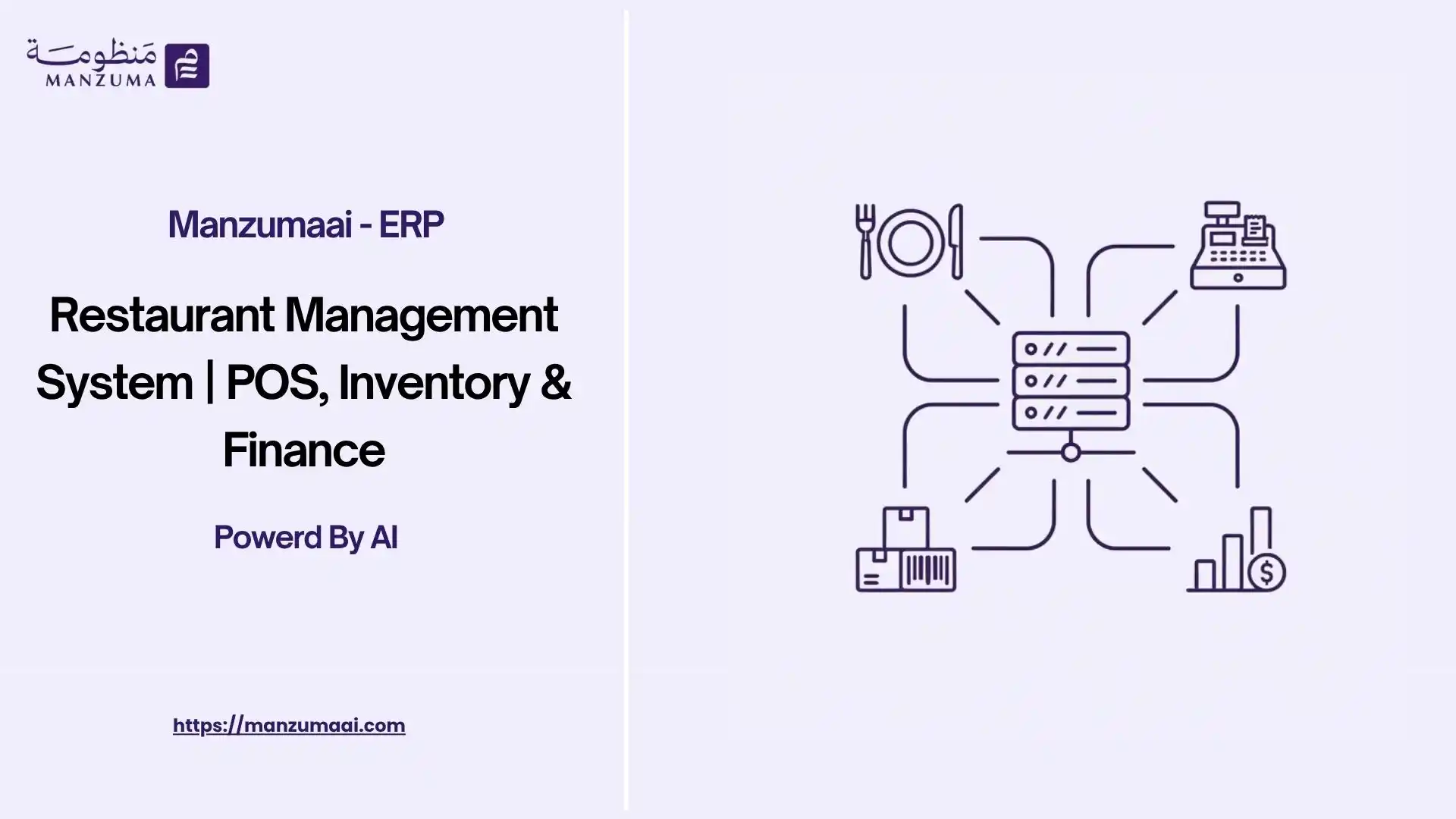
- Restaurants and Hospitality: Manage sales through point-of-sale (POS) systems, connect transactions with inventory and accounting, and track operating expenses.
- Healthcare: Use accounting, purchasing, inventory, and HR features to manage the administrative and financial operations of healthcare facilities, depending on their needs and the system’s capabilities.
The way businesses use Manzuma depends on their industry, size, and operational requirements. Identifying your company’s needs first can help you choose the most suitable modules for your business.
Why Use Manzuma as Your Purchase Order Management Solution?
Manzuma approaches purchasing as part of an integrated ERP environment rather than as an isolated purchase order application
By bringing purchasing and expenses together with inventory، warehouses، accounting، and reporting، the platform can support businesses that want their procurement data connected to the wider operation
This approach can be particularly relevant for companies that need to manage
- Multiple purchasing activities
- Supplier transactions
- Inventory-related procurement
- Business expenses
- Warehouse operations
- Accounting records
- Operational and financial reporting
Instead of moving information manually between separate systems، businesses can work within a unified ERP environment
Ready to Organize Your Procurement Workflow?
If your business is looking for Purchase Order Management Software as part of a complete cloud ERP system، Manzuma can help you explore how purchasing، inventory، supplier management، expenses، and accounting
can fit into a connected workflow:
Before selecting or implementing a solution، define your requirements clearly، including
- Number of users
- Purchasing volume
- Number of branches and warehouses
- Approval hierarchy
- Supplier management requirements
- Inventory requirements
- Accounting workflow
- Reporting needs
Discussing these requirements with the Manzuma team can help determine the appropriate ERP configuration for your business processes
Effective purchase order management is about more than creating and storing purchasing documents
It is about connecting the entire procurement journey—from identifying a business need and requesting approval to creating a purchase order، receiving goods، processing supplier invoices، and recording the financial impact
FAQs
What is Purchase Order Management Software?
It is software used to organize purchase requests، approvals، purchase orders، supplier transactions، receiving، and related procurement activities
What is the difference between a purchase request and a purchase order?
A purchase request represents an internal need، while a purchase order is an authorized purchasing document issued to a supplier
Can purchase order software integrate with inventory?
Yes When purchasing is integrated with inventory management، relevant procurement activities can be connected with stock and warehouse processes
Why use cloud ERP for procurement?
Cloud ERP can centralize purchasing data and connect procurement with inventory، accounting، suppliers، expenses، and other business functions
Is purchase order management part of ERP?
It can be In an integrated ERP system، purchase order management typically works alongside purchasing، inventory، supplier management، expenses، and accounting
Ready to Organize Your Business?
Try Manzuma free for 14 days — no credit card, no commitment.