- What Causes Productivity to Decline in Growing Businesses?
- How Can an ERP System Reduce Time-Consuming Repetitive Tasks?
- Which Business Tasks Can ERP Help Streamline?
- How Does Business Process Automation Improve Productivity?
- How Does ERP Software Help Employees Find Information Faster?
- What Should an ERP System Provide for Faster Information Access?
- How Does ERP Connect Departments and Improve Operational Efficiency?
- What Does an Integrated ERP Workflow Look Like?
- How Can ERP Support Business Growth as a Company Scales?
- Which Areas Can Become More Manageable as the Business Grows?
- How Do You Choose the Best ERP System to Increase Workplace Productivity?
- What Industries Does Manzuma AI Serve?
- How Can Manzuma AI Help Businesses Improve Productivity With an Integrated ERP?
- What Productivity Benefits Can an Integrated ERP Provide?
- What Is the Connection Between Productivity and Business Growth?
- How Can You Get Started With Manzuma AI?
- Can ERP software help a small business grow?
- Does ERP software eliminate manual work completely?
- How does ERP improve employee productivity?
- Is ERP useful for companies with multiple departments?
- What should I consider before choosing an ERP system?
Business growth is not always limited by a lack of effort In many companies, productivity starts to decline because teams are working across disconnected tools, duplicate spreadsheets, and isolated data sources
When employees have to enter the same information multiple times, search across different systems, or wait for reports to be compiled manually, valuable time is lost before the actual work even begins
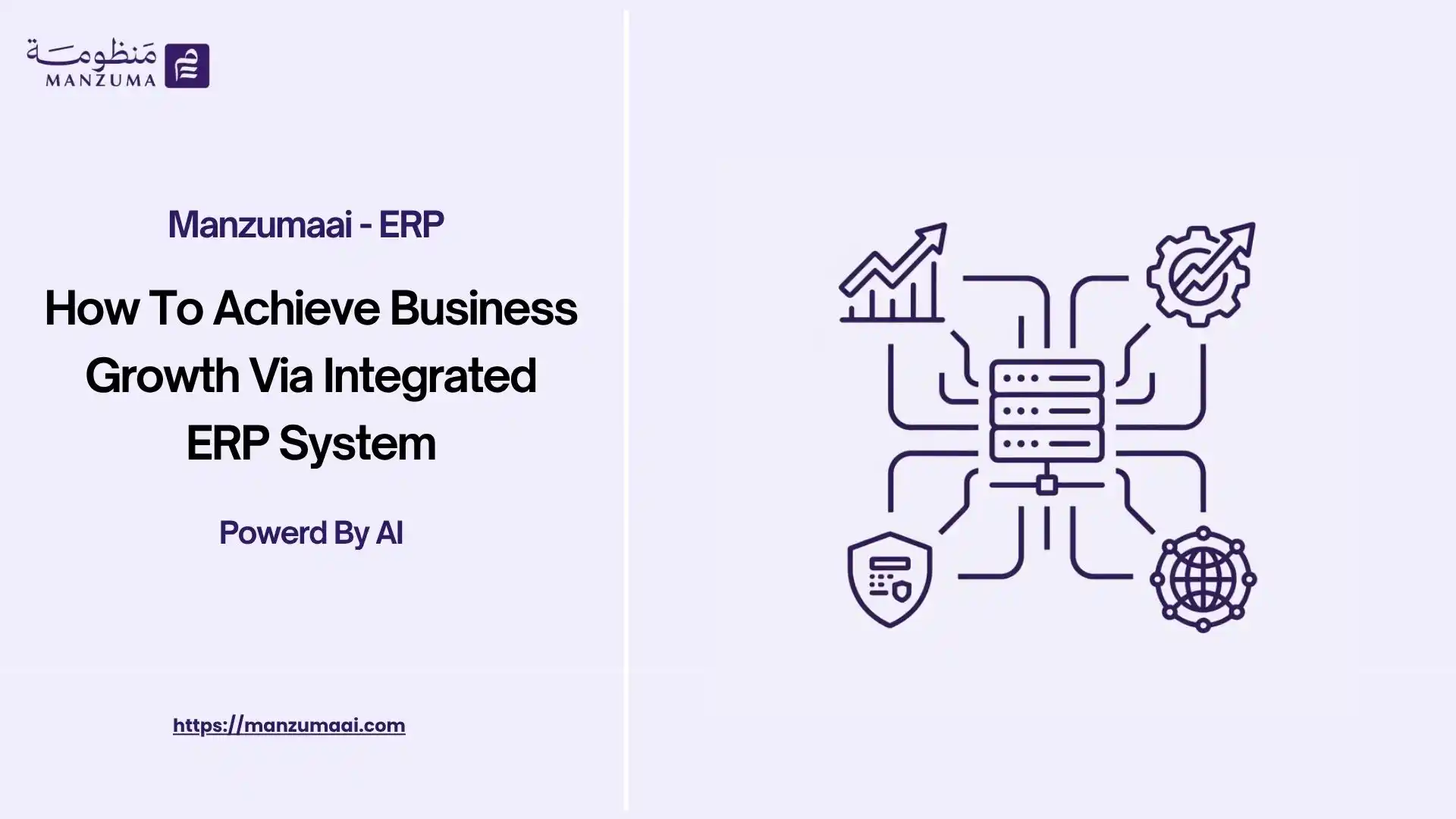
This is where an integrated ERP system can make a measurable difference By connecting business processes and centralizing data, ERP software can reduce repetitive work, improve information flow, and give teams faster access to the insights they need to operate efficiently and support sustainable growth
What Causes Productivity to Decline in Growing Businesses?
Low productivity does not necessarily mean employees are performing poorly In many cases, the underlying issue is the way work is organized
When sales, accounting, inventory, purchasing, and HR teams rely on separate applications, information has to move manually from one system to another This creates additional administrative work and increases the risk of delays, duplicate entries, and inconsistent data
Common causes of productivity loss include:
- Entering the same data into multiple systems
- Excessive reliance on spreadsheets and manual files
- Difficulty finding information when it is needed
- Poor integration between departments
- Delays in preparing management reports
- Repetitive administrative tasks
- Limited visibility across business processes
- Disconnected software that does not share data efficiently
Key takeaway: Before looking for ways to improve productivity, identify where time is actually being lost across the business workflow
How Can an ERP System Reduce Time-Consuming Repetitive Tasks?
Important fact: The value of ERP software goes beyond storing business information Its real value comes from connecting processes within a shared business environment
When sales, invoicing, purchasing, inventory, accounting, and other functions operate through an integrated system, information entered during one process can become part of the data required by another process
Instead of repeatedly copying information between applications, employees can spend more time on activities that require analysis, customer interaction, follow-up, and decision-making
This integrated approach is particularly relevant for businesses dealing with multiple applications and duplicated data entry
Which Business Tasks Can ERP Help Streamline?
An integrated ERP platform can help reduce unnecessary manual work across areas such as:
- Customer and transaction data entry
- Sales orders and invoicing
- Purchasing and expense management
- Inventory updates
- Account and financial data review
- Business reporting
- Cross-department workflow management
Pro Tip: Do not evaluate ERP software only by the number of tasks it can perform Evaluate how many unnecessary steps it can remove from your existing workflows
How Does Business Process Automation Improve Productivity?
Business process automation is not about removing employees from the workflow It is about reducing the amount of manual effort required to complete routine processes
When a workflow is properly configured inside an ERP system, repetitive activities such as transferring information, updating records, or searching through multiple files can be streamlined
Automation becomes even more valuable when it is connected to other business functions Instead of every department operating independently, information can move through a connected workflow
For example, an integrated ERP platform may bring together:
- Sales and invoicing
- Purchasing and expenses
- Inventory and warehouse management
- HR and payroll
- Accounting and financial reporting
- Manufacturing and quality management
- What Does Automation Look Like in Everyday Operations?
- A well-designed automated workflow can help businesses:
- Enter information once instead of recording it in several systems
- Connect related data across relevant departments
- Reduce manual information searches
- Accelerate routine administrative processes
- Free employees to focus on higher-value activities
Important: Automation does not automatically guarantee accurate results Data quality, system configuration, user permissions, and the way employees use the ERP all affect the quality of the output
How Can a Unified ERP System Prevent Duplicate Data Entry?
Consider a simple scenario
A sales representative enters customer information, then the accounting team has to enter the same information again Another department may create a separate spreadsheet containing the same customer data
The problem is not necessarily a lack of employees The problem is duplicated work
A unified ERP system addresses this by creating a centralized data environment where related business processes can work with connected information instead of maintaining multiple isolated versions of the same record
For example, sales transactions can be connected with invoices, customer accounts, accounting records, and reports Purchasing activities can similarly connect suppliers, inventory, expenses, and financial records according to the company's configured workflows
What Are the Benefits of Centralized Business Data?
| Business Challenge | Benefit of a Unified ERP Environment |
| Repeated data entry | Less duplicate work |
| Multiple data files | A centralized source of information |
| Difficult information sharing | Easier access based on user permissions |
| Delayed reporting | Faster access to business data |
| Inconsistent records | Better data consistency |
| Switching between multiple systems | A more unified working environment |
Key takeaway: The fewer times employees have to recreate the same information, the more time they can dedicate to productive business activities
How Does ERP Software Help Employees Find Information Faster?
Time spent searching for information is still part of the cost of running a business
When customer records, inventory data, financial information, employee records, and operational reports are spread across different applications, employees may spend significant time locating and validating the information they need
An ERP system brings related business data into a connected environment, allowing users to access information according to their assigned permissions
This does not simply make information easier to find It can also improve the flow of work because employees spend less time switching between systems and manually assembling information
What Should an ERP System Provide for Faster Information Access?
An effective ERP platform should offer:
- A clear and user-friendly interface
- Connected data across business processes
- Accessible operational and financial reports
- Role-based user permissions
- Process tracking and transaction history
- A unified environment instead of multiple disconnected tools
Key insight: Productivity is not necessarily about working longer hours It is often about giving employees the right information and reducing unnecessary steps between them and the task they need to complete
How Does ERP Connect Departments and Improve Operational Efficiency?
One of the core strengths of ERP software is its ability to treat a business as a connected set of processes rather than isolated departments
For example, a sales transaction may be connected to an invoice, customer account, financial records, and management reporting A purchase transaction may connect a supplier, inventory movement, expense, and accounting record
This creates a more connected operational structure in which departments work with related information instead of rebuilding the same data from scratch
What Does an Integrated ERP Workflow Look Like?
A simplified sales workflow might look like:
Sales → Invoice → Customer Data → Accounting → Reporting
A purchasing workflow could follow:
Purchasing → Supplier → Inventory or Expense → Accounting → Reporting
These workflows do not mean every business activity happens without human involvement Instead, the ERP provides the infrastructure needed to connect related processes while keeping employees involved in review, approval, analysis, and decision-making
How Can ERP Support Business Growth as a Company Scales?
Growth often introduces operational complexity
A company may start with a few employees, a small number of customers, and simple spreadsheets As transaction volumes increase, however, manual processes become harder to maintain
More customers can mean more invoices More products can mean more inventory movements More employees can mean more attendance and payroll records Additional branches can create even more operational data
An ERP system can provide a structured environment for managing these growing requirements
Instead of continuously adding separate tools as the company expands, businesses can build more of their core operations around a connected system
Which Areas Can Become More Manageable as the Business Grows?
An integrated ERP platform can support areas such as:
- Sales and customer management
- Invoicing and receivables
- Purchasing and expenses
- Inventory and warehouses
- Accounting and financial reporting
- HR and payroll
- Manufacturing and quality management
- Multi-branch operations
- Business analytics and reporting
Growth principle: Scaling a business is not only about increasing sales It is also about building processes that can handle higher transaction volumes without creating unnecessary operational complexity
How Do You Choose the Best ERP System to Increase Workplace Productivity?
Choosing the right ERP system is not simply about the number of features it offers. What matters most is its ability to address your company’s actual challenges, connect processes and departments, and reduce the time spent on repetitive tasks. That is why businesses should look for an ERP solution that combines ease of use, data integration, comprehensive functionality, and scalability.
Manzuma AI is one of the leading ERP solutions for businesses looking for an integrated platform to manage their operations from a single place. It brings key business functions together within one unified system, including sales and invoicing, purchasing and expenses, inventory and warehouses, accounting and reporting, human resources and payroll, as well as manufacturing and quality management.
Therefore, when comparing ERP systems, don’t focus only on the number of features. Instead, ask:
Can the system eliminate unnecessary steps, connect your business data, and help your employees get work done faster?
If that is what you are looking for, Manzuma AI provides an integrated ERP environment that helps businesses organize their operations, improve efficiency, and support sustainable growth through a single platform.
What Industries Does Manzuma AI Serve?
Manzuma AI provides an integrated ERP system designed to help businesses across different industries organize their operations, connect departments, centralize data, and improve operational efficiency through one unified platform. Manzuma supports the needs of the following industries:
- Trading & Distribution: Manage sales, purchasing, inventory, customers, suppliers, and operations across multiple branches.
- Manufacturing: Manage production, raw materials, inventory, purchasing, quality, and costs through a connected workflow.
- Services: Streamline financial operations, invoicing, customer management, expenses, and human resources.
- Construction: Manage projects, contracts, costs, purchasing, inventory, and cash flow through an integrated system.
- Restaurants & Hospitality: Efficiently manage sales, point-of-sale operations, inventory, purchasing, and accounting.
- Healthcare: Organize administrative and financial operations while managing resources and inventory efficiently.
With its broad industry coverage, Manzuma is one of the leading ERP solutions for businesses looking for a flexible and scalable system that can adapt to their specific operations while keeping data connected across departments.
How Can Manzuma AI Help Businesses Improve Productivity With an Integrated ERP?
Manzuma AI brings core business operations together within a unified ERP environment rather than requiring companies to manage every department through separate tools
Its ERP platform brings together functions including:
- Sales and e-invoicing
- Purchasing and expenses
- Inventory and warehouse management
- HR and payroll
- Manufacturing and quality management
- Accounting and financial reporting
- AI-powered business assistance through Munjiz AI
By connecting operational activities with financial data and reporting, an integrated ERP environment can help reduce duplicate data entry and provide a more consistent view of business operations
For companies dealing with disconnected applications, the objective is not simply to replace several tools with one application The larger goal is to create a connected workflow in which departments can work with shared business information
What Productivity Benefits Can an Integrated ERP Provide?
Centralized operations
Core business functions can be managed through one connected platform
Less repetitive work
Employees can reduce the need to repeatedly enter the same information across different systems
Connected business data
Operational activities and financial information can be linked within the same environment
Faster reporting
Management can access business information without relying as heavily on manual data collection
Greater operational visibility
Connected processes provide a broader view of how different areas of the business interact
A foundation for growth
A unified system can provide a structured operational environment as transaction volumes and business requirements increase
Pro Tip: ERP implementation should start with business processes, not software features Identify the workflows you want to improve first, then configure the system around the way your business actually operates
What Is the Connection Between Productivity and Business Growth?
Productivity and growth are closely connected, but they are not the same thing
A company can increase sales while still struggling with inefficient processes If every increase in revenue also creates more manual work, administrative complexity, and disconnected data, operational pressure can grow alongside the business
An integrated ERP system can help create a more scalable operational structure by connecting processes, reducing repetitive work, and making business information easier to access
This allows employees and managers to focus more of their time on activities that directly support customers, operations, and strategic decisions
Ultimately, How To Achieve Business Growth is not only a question of generating more revenue It is also about creating efficient processes that allow the organization to handle growth without unnecessarily increasing operational complexity
How Can You Get Started With Manzuma AI?
If your business is currently relying on multiple disconnected tools, spreadsheets, or repetitive manual processes, the first step is to identify where your teams are losing time
Review your sales, purchasing, inventory, accounting, HR, and reporting workflows Then determine which processes would benefit most from centralized data and automation
You can explore Manzuma AI as an integrated ERP solution designed to bring core business functions into one connected environment
Start with your actual business challenges, identify the processes that need improvement, and then evaluate how an integrated ERP system can support your operational goals and long-term growth
Achieving sustainable business growth is not always about asking employees to work harder or longer Often, the bigger opportunity is to remove unnecessary work from the processes they use every day
An integrated ERP system can help businesses centralize data, connect departments, reduce duplicate entry, streamline repetitive workflows, and provide faster access to operational and financial information
FAQs
Can ERP software help a small business grow?
Yes An ERP system can provide a structured foundation for managing operations, data, reporting, and workflows as transaction volumes and business requirements increase
Does ERP software eliminate manual work completely?
No ERP can automate and streamline many repetitive activities, but human review, approvals, analysis, and decision-making remain important
How does ERP improve employee productivity?
By reducing duplicate data entry, connecting departments, simplifying information access, and streamlining routine workflows, ERP can reduce time spent on administrative tasks
Is ERP useful for companies with multiple departments?
Yes Cross-department integration is one of the primary purposes of ERP software, allowing functions such as sales, accounting, purchasing, inventory, and HR to work with connected business data
What should I consider before choosing an ERP system?
Focus on workflow fit, usability, integration, reporting, permissions, scalability, implementation requirements, and the specific operational problems the system is expected to solv
Ready to Organize Your Business?
Try Manzuma free for 14 days — no credit card, no commitment.