- What Is an ERP System for Hospitals?
- The core idea is data integration
- What Problems Can an ERP System Solve in Hospitals?
- What Modules Should an ERP System for Hospitals Include?
- How Does ERP Manage Patient Records and Healthcare Data?
- Patient Data Security Is Critical
- How Can ERP Manage Patient Appointments and Bookings?
- How Does an ERP System for Hospitals Handle Medical Billing?
- How Does ERP Support Medical Insurance and Claims?
- How Does an ERP System Manage Medication and Medical Supply Inventory?
- Why Are Batch and Expiration-Date Tracking Important?
- How Can ERP Improve Visibility Into Medical Inventory?
- How Does ERP Support Hospital HR and Payroll?
- How Does ERP Support Hospital Accounting and Financial Reporting?
- How Do Hospital Departments Work Together in an ERP System?
- What Is the Difference Between a Hospital Management System and an ERP System for Hospitals?
- How Can an ERP System Improve Hospital Financial Management?
- Can ERP Connect Medical Billing With Accounting?
- How Can ERP Help Monitor Revenue and Expenses?
- How Can Unified Reporting Support Faster Management Decisions?
- How Does ERP Improve Medication and Medical Supply Inventory Management?
- Why Is Batch and Expiration Tracking Important?
- How Can ERP Track Available and Used Inventory?
- How Can Hospitals Reduce the Risk of Stock Shortages or Expired Inventory?
- How Does an ERP System Protect Patient Data and Control Access?
- Who Can Access Patient Data in an ERP?
- Why Do Hospitals Need Audit Trails and Permission Controls?
- How Can Manzuma AI Support Healthcare Management?
- How Does Manzuma AI Connect Healthcare Operations With Accounting and Inventory?
- Is Manzuma AI Suitable for Hospitals Clinics and Medical Centers?
- Is It Suitable for Clinics and Medical Centers?
- Can It Support Multiple Healthcare Locations?
- How Can AI Support Hospital Management With Manzuma AI?
- Can Munjiz AI Be Used Through WhatsApp?
- How Should You Choose an ERP System for a Hospital?
- What Are the Benefits of Using an ERP System for Hospitals?
- Can Historical Hospital Data Be Migrated to a New ERP?
- How Long Does It Take to Implement an ERP System in a Hospital?
- Do Hospital Employees Need Specialized ERP Training?
- What Happens if the Internet Connection Goes Down With a Cloud ERP?
- Why Could Manzuma AI Be a Suitable Option for Healthcare Organizations?
Imagine a hospital where appointments are managed in one system billing in another medication inventory in spreadsheets and financial data somewhere else Every department may have the information it needs but management still struggles to see the complete picture
This is where an ERP system for hospitals can make a significant difference
A healthcare ERP does more than automate individual administrative tasks It connects operational financial administrative and healthcare-related processes within a unified environment allowing information to move between departments instead of being repeatedly entered into separate systems
For hospitals clinics and medical centers the real value of ERP lies in this connected workflow—from patient registration and appointments to billing insurance inventory accounting reporting and workforce management
What Is an ERP System for Hospitals?
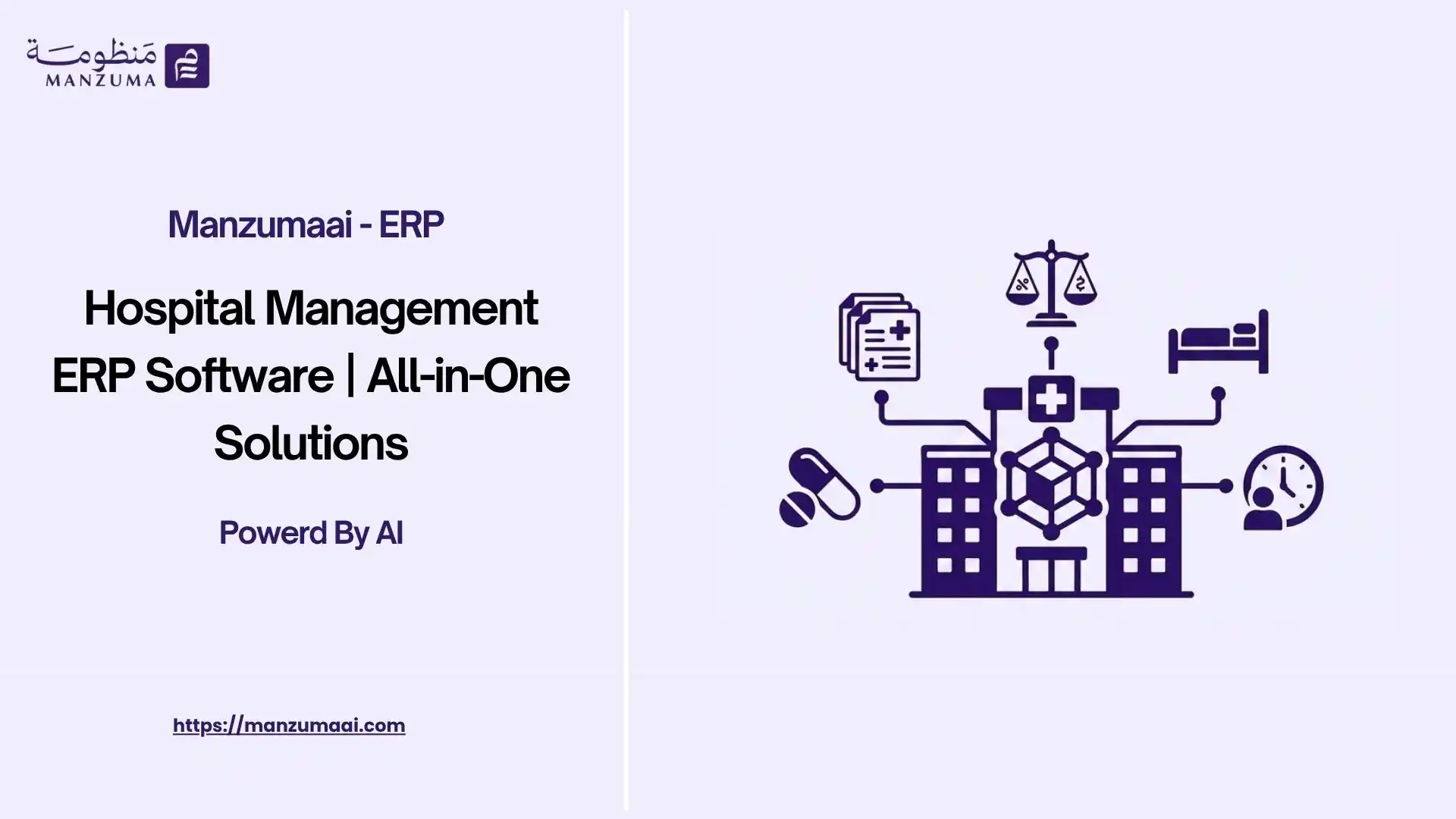
An ERP system for hospitals is a business management platform designed to integrate the resources processes and data involved in running a healthcare organization
Depending on the solution and its available modules a healthcare ERP may support
- Patient records
- Appointment scheduling
- Healthcare services
- Medical billing
- Insurance processes
- Pharmacy and medical inventory
- Accounting and finance
- Human resources
- Payroll
- Procurement
- Reporting
- User roles and permissions
The core idea is data integration
When a healthcare service is recorded for example the transaction may affect billing and accounting and may also be connected to inventory when medication or medical supplies are used
Instead of entering the same information into several systems connected ERP workflows allow relevant data to move between the processes that depend on it
Key takeaway The strength of a healthcare ERP is not determined by the number of modules it contains What matters is how effectively those modules exchange data and support the hospital's actual workflows
What Problems Can an ERP System Solve in Hospitals?
Healthcare organizations often operate across multiple departments each with its own responsibilities and information requirements
When these departments rely on disconnected applications spreadsheets or manual processes several operational challenges can emerge
A hospital may experience
- Scattered patient and operational data
- Difficulty coordinating appointments and bookings
- Delays in issuing invoices
- Challenges tracking outstanding payments
- Complex insurance and claims processes
- Limited visibility into medication and medical supply inventory
- Repeated data entry across departments
- Delayed financial reporting
- Limited visibility into operational performance
- Difficulty producing management reports on time
A centralized ERP environment can help reduce these gaps by bringing related processes and information together
Professional tip Do not begin your ERP evaluation with a feature list Start by identifying the processes that consume the most time create the most errors or require the most manual coordination Then evaluate whether the ERP actually solves those problems
What Modules Should an ERP System for Hospitals Include?
Not every healthcare organization needs the same modules
A small medical center may have different requirements from a multi-department hospital while a healthcare group with multiple locations may require additional capabilities for centralized management
However a healthcare ERP should ideally cover the core processes that connect clinical administration finance operations inventory and workforce management
How Does ERP Manage Patient Records and Healthcare Data?
A healthcare ERP can provide a centralized environment for organizing patient-related information
Depending on the modules and configuration available this may include
- Patient records
- Prescriptions
- Laboratory results
- Appointment information
- Healthcare service information
Centralizing this information can make it easier for authorized users to access the data required for their responsibilities
This becomes particularly important when a healthcare organization manages a large patient population or operates across multiple departments
Patient Data Security Is Critical
Healthcare information is highly sensitive
When evaluating an ERP system for hospitals organizations should therefore examine
- User access controls
- Role-based permissions
- Activity or audit logs
- Encryption
- Backup procedures
- Data protection policies
- Service continuity
Having an ERP system does not automatically make healthcare data secure Security depends on the platform's architecture configuration access controls operational policies and the organization's implementation practices
How Can ERP Manage Patient Appointments and Bookings?
Appointment management is a core part of healthcare operations
Instead of relying on separate spreadsheets calendars or disconnected scheduling tools an integrated healthcare ERP can organize
- Patient appointments
- Booking schedules
- Practitioner availability
- Service scheduling
- Appointment reminders
According to the healthcare capabilities described for Manzuma AI the platform supports appointment management bookings practitioner availability and reminders
The practical benefit is not simply having an online calendar The greater value comes when appointment information remains connected to the patient service billing and other relevant workflows
How Does an ERP System for Hospitals Handle Medical Billing?
Medical billing connects healthcare services with the financial side of the organization
When a healthcare service is delivered the system can record the corresponding financial transaction and generate billing information according to the organization's configured workflow
The value increases when billing is connected to
- Patient information
- Healthcare services
- Insurance information
- Accounting
- Payment tracking
Instead of moving information manually between a healthcare management system and accounting software an integrated ERP can connect the operational event with its financial impact
How Does ERP Support Medical Insurance and Claims?
Insurance adds another layer of complexity to healthcare billing
Healthcare organizations may need to manage services provided insurance claims payments patient contributions and outstanding amounts
Keeping these processes within a connected system can make it easier to organize billing and insurance-related information
The healthcare capabilities described for Manzuma AI include support for
- Co-payments
- Insurance claims
- Billing
The exact insurance workflow claim formats integrations and regulatory requirements should always be verified with the provider before implementation
How Does an ERP System Manage Medication and Medical Supply Inventory?
Medical inventory management requires more than knowing how many units are available
Hospitals and healthcare organizations may need to track
- Available quantities
- Stock movements
- Receipts and issues
- Batch numbers
- Expiration dates
- Medication usage
- Medical supplies
- Inventory levels
According to the healthcare information provided for Manzuma AI medication inventory can include batch numbers and expiration-date tracking
This is particularly relevant because inventory availability alone does not provide the complete operational picture
A hospital may have a medication recorded as available but management may also need to know its batch expiration date movement history and current quantity
Why Are Batch and Expiration-Date Tracking Important?
Healthcare inventory often requires more detailed tracking than standard commercial stock
A system that records batch numbers and expiration dates can provide better visibility into the inventory being received stored issued or used
This can support more structured inventory management and help staff identify items that require attention
How Can ERP Improve Visibility Into Medical Inventory?
When receipts issues transfers and adjustments are recorded systematically the organization can build a clearer picture of inventory movements
This can help management monitor
- Current stock levels
- Medication usage
- Supply consumption
- Batch information
- Expiration dates
- Inventory movements
Professional tip During an ERP demonstration do not evaluate inventory based on a single stock screen Ask the provider to demonstrate a complete scenario—from receiving a medication batch through storage and issue to the point where the transaction appears in inventory records and reports
How Does ERP Support Hospital HR and Payroll?
Hospital operations depend on employees across multiple departments from administrative staff to finance reception inventory teams and healthcare personnel
For this reason an ERP system for hospitals may also need to support workforce management
According to the information provided for Manzuma AI its HR functionality includes
- Employee records
- Attendance and time tracking
- Payroll
- Employee claims
- Roles and permissions
Integrating HR and payroll with the wider ERP environment can reduce the need to manage employee-related information in completely separate systems
How Does ERP Support Hospital Accounting and Financial Reporting?
Financial management is one of the areas where ERP integration can provide significant operational value
A hospital's financial data may originate from
- Patient invoices
- Insurance transactions
- Purchases
- Expenses
- Payroll
- Inventory
- Other operational activities
When these processes are connected to accounting finance teams can work with transaction data from the operational systems instead of manually consolidating information from multiple sources
This can support visibility into
- Revenue
- Expenses
- Receivables
- Financial obligations
- Operational financial performance
- Management reports
The exact accounting treatment depends on the organization's accounting configuration and applicable financial and tax requirements
How Do Hospital Departments Work Together in an ERP System?
Integration is one of the primary reasons organizations adopt ERP
The objective is to allow information entered during one stage of a process to become available to other connected functions without unnecessary re-entry
Consider a typical patient service workflow
- Patient registration or retrieval of an existing patient record
- Appointment scheduling and assignment of the relevant service or practitioner
- Healthcare service delivery and recording of required information
- Invoice creation or insurance transaction processing
- Accounting update based on the financial transaction
- Inventory update when medication or medical supplies are used
- Operational and financial reporting
This creates a connected workflow rather than a collection of isolated transactions
The fewer times employees need to manually recreate the same information the more structured the overall process can become
What Is the Difference Between a Hospital Management System and an ERP System for Hospitals?
The two terms can sometimes be used interchangeably but their scope can be different depending on the software architecture
A hospital management system may focus primarily on healthcare-related operations such as patients appointments clinical administration and billing
An ERP system for hospitals generally aims to connect healthcare operations with broader business functions such as accounting procurement inventory HR payroll and management reporting
| Area | Hospital Management System | Healthcare ERP |
| Patient management | Often a core function | Included according to available modules |
| Appointments | Common | Common |
| Billing | Common | Connected to broader financial workflows |
| Accounting | May be separate or limited | Integrated with business operations |
| Inventory | Often available | Connected with operational and financial processes |
| HR and payroll | May be separate | Can be part of the ERP environment |
| Reporting | Depends on the system | Can use integrated business data |
| Cross-department integration | Varies by solution | A core ERP principle |
This does not mean ERP is automatically the better choice for every healthcare organization
The right option depends on the organization's size workflows operational complexity and the level of integration it actually needs
How Can an ERP System Improve Hospital Financial Management?
Healthcare management requires more than knowing total revenue
Management may need to understand where revenue comes from what the organization spends what remains outstanding and how operational activities affect financial performance
Can ERP Connect Medical Billing With Accounting?
When billing and accounting operate within an integrated ERP environment financial documents and transactions can be connected to the relevant accounts according to the system's configuration
This reduces the need to manually transfer billing information into accounting software
How Can ERP Help Monitor Revenue and Expenses?
Revenue and expense information can originate from several hospital operations
An integrated ERP can bring together data from invoices purchases expenses payroll inventory and other transactions so that finance teams can work from a more centralized financial dataset
How Can Unified Reporting Support Faster Management Decisions?
When management relies on data from several disconnected departments reports may require manual consolidation before they can be reviewed
Integrated reporting can provide faster access to available operational and financial information helping management monitor the indicators supported by the system
How Does ERP Improve Medication and Medical Supply Inventory Management?
Medical inventory management deserves special attention because stock quantity is only one part of the picture
- Medical Inventory Is Not Just About Quantity
- A healthcare organization may need to know
- How many units are available
- Which batch they belong to
- When they expire
- Where they moved
- How much has been issued
- Which supplies have been consumed
This makes inventory data quality particularly important
Why Is Batch and Expiration Tracking Important?
Knowing that an item exists in inventory does not necessarily tell the organization whether it is the right batch whether it is approaching expiration or how it entered and moved through the inventory process
Recording batch and expiration information can improve inventory visibility and support more structured stock management
How Can ERP Track Available and Used Inventory?
By recording receiving issuing transferring and adjustment transactions the system can provide a clearer representation of inventory movement according to its configured capabilities
How Can Hospitals Reduce the Risk of Stock Shortages or Expired Inventory?
A structured inventory process can include
- Monitoring stock levels
- Recording batches consistently
- Tracking expiration dates
- Linking issues to actual inventory movements
- Using alerts where supported
- Reviewing inventory reports regularly
How Does an ERP System Protect Patient Data and Control Access?
Data governance is particularly important in healthcare because different employees require different levels of access
A receptionist finance employee inventory manager administrator and healthcare professional may not need access to the same information
Who Can Access Patient Data in an ERP?
The answer depends on the system's architecture and configuration
Role-based access control can be used to assign permissions according to a user's role ensuring that employees receive the access required for their responsibilities
The exact permission model should be evaluated during the product demonstration and implementation process
Why Do Hospitals Need Audit Trails and Permission Controls?
Access controls help organizations determine who can access or perform actions within the system
Audit capabilities can also support internal oversight by providing records of activities performed within the system depending on the platform's available functionality
Important An ERP system does not automatically guarantee data security Before selecting a healthcare ERP evaluate encryption access controls backup procedures audit capabilities infrastructure service continuity and applicable data protection requirements
How Can Manzuma AI Support Healthcare Management?
If the primary challenge is fragmented healthcare operations the value of Manzuma AI lies in providing a cloud-based ERP environment that connects administrative financial and operational processes
According to the healthcare information provided the platform supports a range of healthcare-related functions including
- Patient records
- Appointments and bookings
- Medical billing
- Insurance
- Patient portal
- Medication inventory
- Batch tracking
- Expiration-date tracking
- Accounting and reporting
- Human resources and payroll
- Users and permissions
The objective is to manage related healthcare and business processes within one connected environment rather than relying on separate tools for every department
How Does Manzuma AI Connect Healthcare Operations With Accounting and Inventory?
The value of any ERP system becomes clearer when a single operational event creates a connected sequence of information
A simplified healthcare workflow can be represented as
Patient → Appointment → Healthcare Service → Invoice → Accounting → Inventory → Reporting
For example when a healthcare service is recorded the transaction can have a financial impact according to the configured workflow
If medication or medical supplies are used as part of the process the relevant inventory movement can also be recorded
The healthcare information provided for Manzuma AI describes an example in which patient information and appointments lead to billing patient record updates and medication or supply deductions from inventory including expiration-date considerations
The exact workflow depends on the system configuration and the processes implemented by the healthcare organization
Is Manzuma AI Suitable for Hospitals Clinics and Medical Centers?
Healthcare organizations vary considerably in size and complexity
A large hospital with multiple departments may have different requirements from a private clinic or medical center
Therefore the right question is not simply whether a platform is labeled as a healthcare ERP The organization should evaluate whether its workflows are actually supported
Is It Suitable for Multi-Department Hospitals?
Large hospitals need to coordinate information across departments while controlling user access and connecting financial and operational processes
The ERP should therefore be evaluated based on
- Departmental workflows
- User roles
- Data permissions
- Financial processes
- Inventory
- Reporting
- Cross-department data flow
Is It Suitable for Clinics and Medical Centers?
For clinics and medical centers key requirements may include
- Patient management
- Appointment scheduling
- Billing
- Insurance
- Medication inventory
- Financial reporting
The importance of each function depends on the organization's operating model
Can It Support Multiple Healthcare Locations?
If an organization operates across multiple branches or facilities it should verify the platform's capabilities for managing
- Branches
- Users
- Permissions
- Data
- Reporting
- Centralized management
The multi-branch workflow should be tested during the product demonstration rather than assumed from the platform description
How Can AI Support Hospital Management With Manzuma AI?
Adding AI to an ERP environment is not valuable simply because the product includes the term AI
The important question is what users can actually accomplish with it
According to the information provided Manjez AI is an intelligent assistant that can support
Business data queries
Natural-language reporting
Data analysis
Smart alerts
Selected business tasks
PDF invoice analysis and data extraction within the platform's stated capabilities
What Can Munjiz AI Help Hospital Management With?
Examples described in the provided information include
- Querying company data
- Requesting reports using natural language
- Analyzing sales data
- Providing smart alerts
- Assisting with selected tasks
- Analyzing PDF invoices and extracting information
The availability and scope of these capabilities should be verified for the specific product version and healthcare configuration
Can Munjiz AI Be Used Through WhatsApp?
The information provided for Manzuma AI indicates that Manjez AI can be used through WhatsApp for supported activities such as querying business information requesting reports or checking customer balances
However healthcare organizations should not assume that sensitive patient information can be accessed through WhatsApp simply because the assistant supports WhatsApp-based interactions
Any use involving patient or other sensitive healthcare data should be validated against the platform's official security architecture permissions supported workflows and applicable privacy requirements
How Should You Choose an ERP System for a Hospital?
Choosing a healthcare ERP should be approached as a business and operational project not simply as a software purchase
Identify the Processes You Want to Integrate
Start by documenting the problems you want the system to solve
For example
- Repeated data entry
- Billing delays
- Inventory visibility
- Insurance processing
- Financial reporting
- Appointment coordination
Identify Departments and Users
Determine which teams will use the system such as
- Reception
- Administration
- Finance
- Inventory
- HR
- Management
- Healthcare departments
Then define what information each role actually needs
Define Data and Permission Requirements
Determine
- Who can view patient information?
- Who can create invoices?
- Who can access accounting?
- Who can modify inventory?
- Who can approve transactions?
- Who can access management reports?
This is essential for healthcare environments
Review the Billing and Insurance Workflow
Ask the vendor to demonstrate the complete process from healthcare service to
Service → Billing → Insurance Claim → Payment → Reporting
Do not evaluate billing as a standalone feature
Test Medical Inventory Management
Pay particular attention to
- Batch numbers
- Expiration dates
- Receiving
- Issuing
- Transfers
- Adjustments
- Stock levels
- Inventory reports
6 Evaluate Reporting
Management should be able to access the information required for decision-making without depending on extensive manual data consolidation
Ask the vendor to demonstrate the actual reports your organization needs
Run a Realistic Product Demo
A product demonstration should use real-world scenarios rather than simply showing individual screens
For example ask the vendor to demonstrate
Patient Registration → Appointment → Service → Billing → Accounting → Medication Issue → Inventory → Report
This provides a much better indication of whether the ERP fits the hospital's actual workflow
What Are the Benefits of Using an ERP System for Hospitals?
When the right ERP is properly configured and implemented integrating healthcare and business processes can provide several operational benefits
Better Data Visibility
Operational and financial information can be brought into a more connected environment
Less Duplicate Data Entry
Employees can avoid repeatedly entering the same information into separate systems where workflows are integrated
Stronger Access Control
User roles and permissions can provide more structured control over access to business and healthcare information
Better Medical Inventory Management
The organization can track quantities batches expiration dates and inventory movements according to system capabilities
Faster Reporting
Management can access available data without waiting for every department to manually consolidate its information
Better Cross-Department Coordination
Information can move between connected departments and processes
Support for Growth
A centralized ERP can help organizations manage more complex workflows as their operations expand provided the platform can scale with their requirements
The goal of healthcare ERP is not to replace employees or eliminate every manual process Its purpose is to make business and operational information more connected structured accessible and manageable
When hospital data is spread across multiple applications it becomes harder to maintain a complete view of patients appointments billing inventory accounting employees and operational performance
An ERP system for hospitals addresses this challenge by connecting relevant processes within a unified business environment
Can Historical Hospital Data Be Migrated to a New ERP?
Data migration is possible in principle but the success of the process depends on the format quality volume and compatibility of the existing data
A proper migration project should include data preparation mapping validation testing and review before the new ERP goes live
How Long Does It Take to Implement an ERP System in a Hospital?
There is no universal implementation timeline
The duration can depend on
- Hospital size
- Number of users
- Number of departments
- Historical data volume
- Required ERP modules
- Integrations
- Customizations
- Implementation scope
A small medical facility and a large multi-department hospital should not be expected to follow the same implementation timeline
Can Multiple Hospital Branches or Facilities Be Connected to One ERP?
This depends on the ERP's branch-management capabilities licensing or subscription plan architecture and configuration
Healthcare organizations with multiple locations should test multi-branch scenarios during the product demonstration and confirm how data users permissions and reports are handled across locations
Do Hospital Employees Need Specialized ERP Training?
Yes Training is an important part of successful ERP adoption
Different departments use different workflows and permissions so employees need to understand how the system applies to their specific responsibilities
According to the information provided for Manzuma AI training resources include a video tutorial library and a 45-minute Zoom session with an expert
Organizations should confirm the current training and onboarding options before implementation
What Happens if the Internet Connection Goes Down With a Cloud ERP?
A cloud ERP generally requires an internet connection to access the system
Healthcare organizations should therefore evaluate connectivity at the main facility and branches before implementation
They should also ask the ERP provider about service continuity infrastructure availability backup procedures and how access is handled during connectivity disruptions
Why Could Manzuma AI Be a Suitable Option for Healthcare Organizations?
For healthcare organizations that need more than a standalone appointment or billing application process integration becomes an important selection criterion
The healthcare information provided for Manzuma AI describes a platform that brings together functions such as
- Patient management
- Appointments
- Billing
- Insurance
- Patient portal
- Medication inventory
- Batch tracking
- Expiration-date management
- Accounting
- Reporting
The suitability of the platform ultimately depends on whether these capabilities match the organization's actual workflows regulatory requirements data-security needs and implementation scope
Ready to Organize Your Business?
Try Manzuma free for 14 days — no credit card, no commitment.