- What Is an ERP System and Why Should Employees Understand How It Works?
- How Does an ERP System Work Inside a Company Step by Step?
- How Does Information Move Through an ERP System?
- What ERP Modules Do Employees Typically Use?
- How Do Employees Use an ERP System Based on Their Roles?
- How Does an Accountant Use an ERP System?
- How Does a Sales Employee Use an ERP System?
- How Does a Purchasing Employee Use an ERP System?
- How Does a Warehouse Employee Use an ERP System?
- How Does an HR Employee Use an ERP System?
- How Does an ERP System Connect Different Departments?
- Does an Employee Need Accounting or Technical Expertise to Use ERP?
- What Skills Help Employees Use ERP Efficiently?
- How Does ERP Usage Differ by Industry?
- How Do Employees in Professional Services Use ERP?
- How Do Employees in Manufacturing Companies Use ERP?
- How Do Employees in Trading and Distribution Companies Use ERP?
- How Do Employees in Construction Companies Use ERP?
- How Do User Permissions Help Protect Company Data?
- Why Is Employee Training Important Before ERP Implementation?
- What Should ERP Employee Training Include?
- How Do Reports and Dashboards Help Employees and Management?
- How Does Manzuma AI Help Employees Manage Business Operations Through One ERP System?
- How Can Employees Benefit From Manzuma AI in Their Daily Work?
- How Can Manzuma AI Support Companies With Multiple Branches and Departments?
- When Does a Company Need an Integrated ERP System From Manzuma AI?
- FAQs
- What departments can be connected through an ERP system?
- How does an accountant use an ERP system?
- Does ERP usage vary by industry?
- Can ERP permissions be customized for each employee?
- Why is ERP important for companies with multiple branches?
- How does Manzuma AI help employees manage daily operations?
Managing a growing company with separate tools for sales accounting inventory and HR may seem manageable—until information starts falling through the cracks Sales teams enter data in one system accountants update another and inventory records may live in spreadsheets An ERP system brings these processes together in one connected environment allowing information to move between departments without repeated data entry This ERP system explanation shows employees how that integration works in practical everyday business operations
What Is an ERP System and Why Should Employees Understand How It Works?
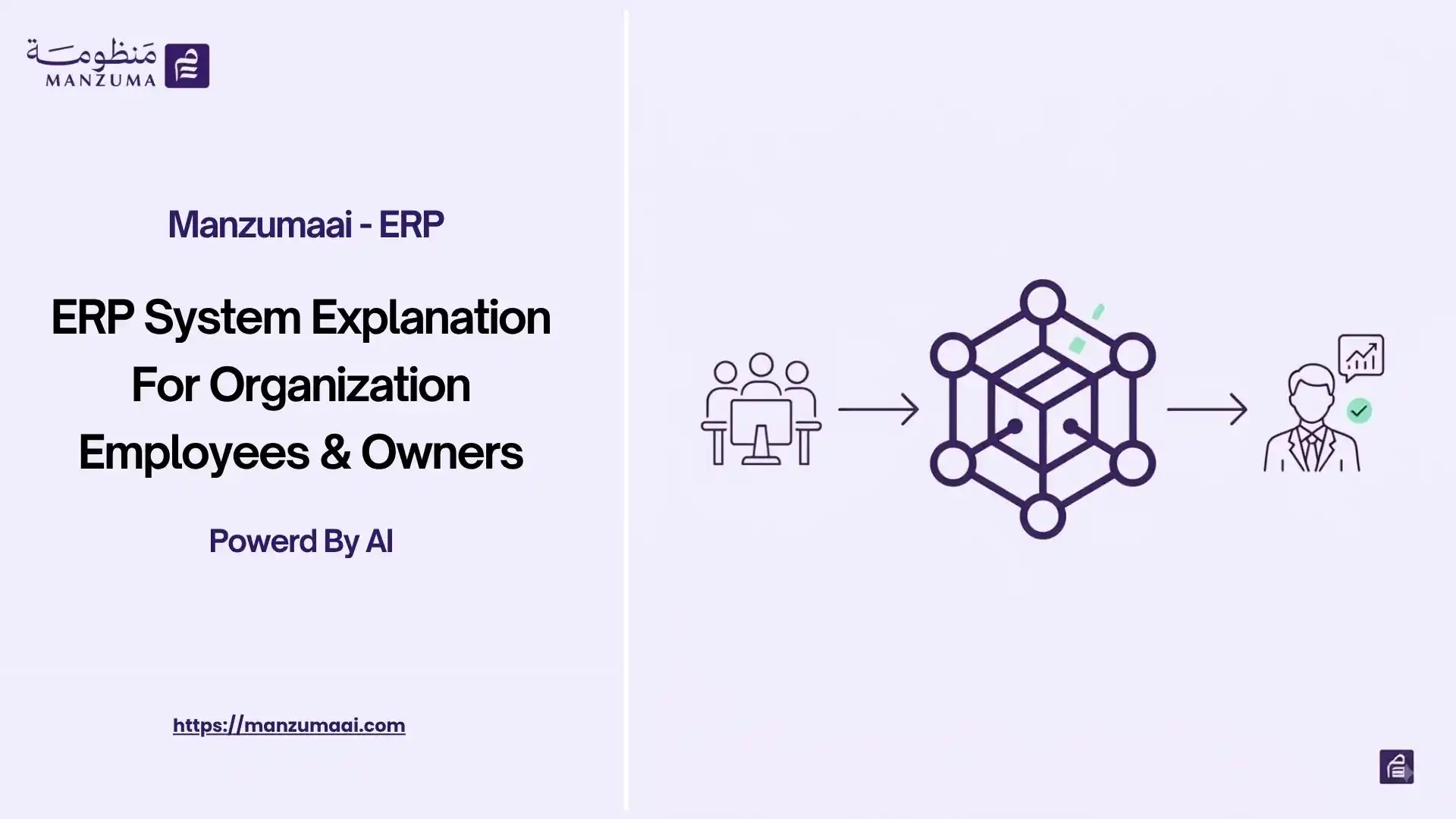
ERP stands for Enterprise Resource Planning In simple terms an ERP system connects a company's core business processes within one centralized system These processes may include sales purchasing inventory accounting employees customers reporting and other operational functions
Instead of allowing every department to maintain its own isolated records an ERP system creates a connected flow of information When an employee completes a transaction the relevant data can become available to other departments according to the company's workflows system configuration and user permissions
This becomes particularly important when a company relies on multiple disconnected applications Sales may use one system accounting another inventory may depend on Excel spreadsheets and some HR processes may still be handled manually This can lead to duplicate data entry delayed reporting and inconsistencies in invoices inventory balances customer accounts or payroll information
Key takeaway The simplest way to understand an ERP system is this a business transaction is entered once and its relevant effects can flow to every connected department that needs the information
How Does an ERP System Work Inside a Company Step by Step?
To understand an ERP system in practical terms imagine a single sales transaction The process does not necessarily end when the sales document is created Depending on the workflow the transaction can affect inventory accounting customer records and management reports
How Does Information Move Through an ERP System?
The process typically follows these steps
1- The employee records the transaction
The process starts in the appropriate module such as Sales
2- The transaction is linked to relevant data
The document is connected to the appropriate customer product account supplier or other master data
3- Related records are updated
The system updates connected records based on the configured workflow
4- The financial impact is recorded
Where applicable the transaction creates or updates its accounting impact
5- Inventory is updated
If the transaction involves products the relevant inventory movement can be recorded
6- Reports are updated
The transaction becomes part of the relevant operational and financial reports
7- Management uses the updated information
Managers can use the available data to monitor performance and support business decisions
The Manzuma AI materials describe this connected approach through examples such as linking quotations with customers invoices and accounting connecting product sales with inventory and connecting purchase invoices with suppliers and accounting
In short Employees do not use an ERP system as a tool disconnected from their daily work They perform their normal business processes inside the system while the relevant effects flow across connected modules according to the configured workflow
What ERP Modules Do Employees Typically Use?
The modules available to employees vary according to the company's industry structure and operational requirements The Manzuma AI materials identify several core areas including sales and invoicing purchasing and expenses inventory and warehouses HR and payroll manufacturing and quality accounting and reporting CRM POS and analytics
Common ERP modules include
- Sales and Invoicing
- Purchasing and Expenses
- Accounting and Financial Reporting
- Inventory and Warehouse Management
- Human Resources and Payroll
- Customer Relationship Management (CRM)
- Manufacturing and Quality
- Point of Sale (POS)
- Reports and Analytics
Professional Tip Employees do not need access to every ERP module Each user should have access to the functions and information required for their actual responsibilities
How Do Employees Use an ERP System Based on Their Roles?
The best way to understand ERP is not through technical terminology alone but by asking a simple question What does each employee actually do inside the system every day?
How Does an Accountant Use an ERP System?
An accountant can use the ERP system to manage financial transactions monitor accounts review accounting records and generate reports according to the company's processes and the user's permissions
- Typical responsibilities include
- Reviewing accounting entries and transactions
- Managing customer and supplier accounts
- Recording and reviewing expenses
- Monitoring revenues
- Performing required reconciliations
- Reviewing financial balances
- Generating financial reports
The Manzuma AI materials also describe connections between accounting and other business processes including the accounting impact of approved payroll and the relationship between inventory and accounting
How Does a Sales Employee Use an ERP System?
A sales employee typically works through a sales cycle that begins with customer information and opportunities and can continue through quotations sales orders and invoicing
Typical activities include
- Creating and maintaining customer records
- Preparing quotations
- Creating sales orders
- Monitoring sales activities
- Tracking order status
- Following up on invoices
- Connecting sales transactions with inventory and accounting when applicable
The benefit is that sales information does not have to remain isolated from the operational and financial data associated with the transaction
How Does a Purchasing Employee Use an ERP System?
An ERP system helps purchasing teams organize the procurement cycle and maintain visibility over suppliers purchase requests orders receipts and invoices
Common tasks include
- Creating purchase requests
- Managing supplier information
- Issuing purchase orders
- Tracking deliveries and receipts
- Reviewing purchase invoices
- Connecting purchasing activities with inventory and accounting
This creates a clearer purchasing workflow and helps related departments access the information they need
How Does a Warehouse Employee Use an ERP System?
Warehouse employees use ERP tools to record and monitor the movement of products throughout the business
Typical activities include
- Recording goods receipts
- Recording stock issues
- Monitoring inventory quantities
- Managing multiple warehouses or branches
- Recording stock transfers
- Performing stock counts
- Processing inventory adjustments
- Monitoring items approaching reorder levels
The Manzuma AI materials highlight support for multiple branches and warehouses inventory movements low-stock alerts stocktaking adjustments and connections between inventory purchasing and accounting
Key takeaway ERP turns warehouse activity into structured business data that can also support purchasing sales accounting and management reporting
How Does an HR Employee Use an ERP System?
An integrated HR and payroll module can centralize employee information and related HR processes
Depending on the system configuration HR teams may use ERP to manage
Employee records
Attendance and time tracking
Payroll
Employee claims
User access and permissions
HR-related information and reports
This allows HR information to remain connected to the broader business environment rather than being maintained entirely in separate files
How Does an ERP System Connect Different Departments?
This is one of the most important concepts in any ERP system explanation ERP is not simply a place to store business information Its value comes from connecting processes that depend on one another
For example when a sales employee records a product sale
Sales transaction → Inventory movement → Customer record → Accounting impact → Management reporting
The exact workflow depends on how the ERP is configured but the principle remains the same information created during one business process can support related processes without requiring every department to recreate the same information manually
The Manzuma AI materials describe integration across sales invoicing accounting inventory and CRM They also explain how an approved purchase invoice can affect inventory or record the related expense or supplier liability
Professional Tip The real value of ERP is not the number of modules it contains It is the ability of those modules to work together and reduce fragmented data entry
Does an Employee Need Accounting or Technical Expertise to Use ERP?
Not necessarily The level of knowledge required depends primarily on the employee's role and the ERP modules they use
For example a warehouse employee needs to understand receiving issuing transfers and inventory procedures An accountant needs deeper knowledge of the accounting processes handled within the system
The employee's most important requirement is understanding
The business procedure they are responsible for
- What information they need to enter
- Which documents are connected to the transaction
- Which steps are required for approval
- What they are authorized to access
- How to review the information before completing the process
What Skills Help Employees Use ERP Efficiently?
Employees can become more effective ERP users by developing the following skills
- Understanding daily business processes
- Knowing which data must be entered
- Searching for information within the system
- Understanding related documents and transactions
- Following assigned permissions and workflows
- Reviewing data before approval
- Finding and interpreting the reports relevant to their role
Key takeaway Employees do not need to become ERP technicians They need to understand how their existing responsibilities are performed within the system
How Does ERP Usage Differ by Industry?
There is no single ERP workflow that fits every business The operational cycle changes significantly depending on whether a company provides services manufactures products distributes goods or manages construction projects
The Manzuma AI materials reflect these industry-specific requirements
How Do Employees in Professional Services Use ERP?
For professional services businesses ERP usage often revolves around customers projects working hours billing expenses and project profitability
Key areas include
- Customer management
- Project management
- Time and attendance records
- Service billing
- Expense tracking
- Customer portals
- Project profitability
- Financial reporting
The goal is to connect the customer's commercial relationship with the operational work and financial results associated with the project
How Do Employees in Manufacturing Companies Use ERP?
Manufacturing requires ERP processes that extend beyond sales and accounting into production and operational control
Key areas include
- Production planning
- Bills of Materials (BOM)
- Quality inspection
- Workstations
- Maintenance
- Work in Progress (WIP)
- Raw material procurement
- Inventory management
- Production-related costs
By connecting production with inventory purchasing sales and accounting employees can work with information that reflects the broader manufacturing cycle
How Do Employees in Trading and Distribution Companies Use ERP?
Trading and distribution businesses typically depend heavily on product availability purchasing inventory sales warehouses and branch operations
ERP can support
- Sales management
- Purchasing
- Supplier management
- Customer management
- Inventory control
- Warehouse operations
- Barcode management
- Serial and batch tracking
- Multi-currency operations
- Branch management
- Sales and inventory reporting
The Manzuma AI materials specifically highlight supply chain management inventory optimization sales barcodes serial tracking currencies and connected sales channels
How Do Employees in Construction Companies Use ERP?
Construction businesses have project-driven workflows that require close monitoring of costs contracts progress equipment and financial performance
Relevant ERP functions include
- Project management
- Bill of Quantities (BOQ)
- Real-time project costs
- Progress payment certificates
- Retention amounts
- Equipment management
- Change orders
- Procurement
- Expenses
- Accounting
- Project profitability
Key takeaway The more closely an ERP system matches the company's actual industry workflow the more naturally employees can use it as part of their daily operations
How Do User Permissions Help Protect Company Data?
User permissions determine what each employee can see access or perform inside the ERP system This is essential because employees in different roles have different responsibilities and should not automatically have access to the same information
For example a sales employee may not need access to sensitive accounting information while a warehouse employee may not require the same permissions as a finance manager
A structured permission model can help companies
Create individual user accounts
Assign access according to job roles
Control which operations users can perform
Protect sensitive information
Organize responsibilities
Reduce unauthorized access
The Manzuma AI materials refer to detailed roles and access permissions including more than 60 permissions within HR and payroll management
Important Giving every employee identical permissions is not a sound access-control practice User access should reflect actual responsibilities and follow the company's internal policies
Why Is Employee Training Important Before ERP Implementation?
Even a well-designed ERP system requires employees who understand how to use it correctly Training should therefore go beyond showing users where buttons and menus are located
Effective ERP training should be connected to the employee's actual workflow
What Should ERP Employee Training Include?
Explain the new workflow
Employees should understand how their daily processes will work inside the system
Train each employee on the relevant module
Training should reflect the employee's actual role
Clarify responsibilities and permissions
Users should know what they can access create edit and approve
Practice data entry and review
Employees should learn how to enter information accurately and verify it
Explain role-specific reports
Each employee should know which reports are relevant to their responsibilities
Test workflows before go-live
Realistic scenarios can help identify problems before the system becomes fully operational
Provide post-launch support
Employees often need additional guidance after using the system in real working conditions
Key takeaway Effective ERP training teaches employees how to do their jobs inside the system rather than simply introducing them to the software's features
How Do Reports and Dashboards Help Employees and Management?
Reports turn the data recorded inside an ERP system into information that can be used for monitoring and analysis
Different users need different levels of information
- User Level
- Primary Use
- Employee
- Monitor tasks transactions and information related to their role
- Department Manager
- Monitor team performance workflows and department reports
- Senior Management
Review consolidated indicators and business information for decision-making
This is where connected data becomes particularly valuable A correctly recorded transaction can contribute to the reports used by employees managers and executives—while each user sees information according to their role and permissions
The Manzuma AI materials include reporting and analytics capabilities and describe Monez AI as a way for users to request reports or answers from the system in Arabic
How Does Manzuma AI Help Employees Manage Business Operations Through One ERP System?
Manzuma AI is presented in the provided materials as a cloud-based ERP system for business management combining core business operations with AI capabilities through Monez AI
The platform includes areas such as
- Sales and invoicing
- Purchasing and expenses
- Inventory and warehouses
- HR and payroll
- Manufacturing and quality
- Accounting and reporting
- CRM
- POS
- Reports and analytics
The main idea is not simply to place multiple functions under one interface The value lies in connecting the underlying processes A sales transaction for example can affect inventory accounting customer balances and related reports instead of requiring the same information to be entered repeatedly
How Can Employees Benefit From Manzuma AI in Their Daily Work?
Execute Daily Operations From One Place
Instead of moving between several disconnected applications employees can work within the relevant ERP modules according to their roles and permissions
Access Business Data Connected to Their Work
Connected data can help employees find the information required to complete their tasks without relying heavily on separate spreadsheets or isolated records
Monitor Processes and Tasks
Employees can follow relevant transactions and workflows through the appropriate modules and reports
Reduce Repetitive Data Entry
When information flows between connected modules employees have less need to enter the same information in multiple places
Generate Reports Faster
Manzuma AI includes accounting reporting and analytics capabilities The provided materials also describe Monez AI as supporting requests for reports and answers in Arabic
Improve Cross-Department Collaboration
When departments work with connected business data information can move more consistently between sales inventory accounting HR and other functions
How Can Manzuma AI Support Companies With Multiple Branches and Departments?
ERP becomes increasingly valuable as companies add branches warehouses employees and transactions Managing every location through separate spreadsheets and disconnected systems can make consolidated reporting and operational visibility more difficult
According to the provided Manzuma AI materials the platform supports multiple branches and warehouses inventory movement tracking low-stock notifications stocktaking adjustments and connections between inventory purchasing and accounting
- This can help businesses
- Centralize business data
- Monitor branches and warehouses
- Track sales
- Manage inventory
- Connect operations with accounting
- Generate consolidated reports
- Organize user permissions
Practical insight For a multi-branch company the challenge is not only the volume of data It is knowing where the information is stored and ensuring that different departments are working from consistent business data
When Does a Company Need an Integrated ERP System From Manzuma AI?
The need for ERP often becomes clear when operational problems start repeating across departments
Your company may be approaching this stage when it experiences
- A growing number of employees and departments
- Multiple branches or warehouses
- Repeated data entry
- Heavy reliance on multiple Excel files
- Difficulty producing reports quickly
- More manual-entry errors
- Slow information flow between departments
- Limited visibility across business operations
- A growing need for integrated business data
The Manzuma AI materials position the platform around addressing fragmented business tools by bringing core operations into a unified environment
The important point Understanding what an ERP system is should be only the starting point Companies should also examine their current workflows identify where data becomes fragmented and determine which processes would benefit most from integration and automation
An ERP system explanation should go beyond defining Enterprise Resource Planning The real value lies in understanding how everyday employee actions connect across the business
When sales inventory accounting HR purchasing and reporting operate on connected data employees spend less time repeating administrative work and more time completing meaningful tasks Manzuma AI extends this approach through a cloud ERP environment designed to connect core operations and support users with AI-driven access to business information reporting and analytics
FAQs
What departments can be connected through an ERP system?
An ERP system can connect functions such as sales and invoicing purchasing and expenses inventory and warehouses accounting and reporting HR and payroll CRM manufacturing and other business operations depending on the platform and the company's configuration
How does an accountant use an ERP system?
An accountant can use ERP to manage and review accounting transactions monitor customer and supplier accounts record expenses and revenues perform reconciliations and generate financial reports according to the company's accounting workflow and the user's permissions
Does ERP usage vary by industry?
Yes Manufacturing typically requires production quality materials and WIP management Trading businesses rely heavily on sales purchasing inventory and supply chain processes Construction requires project costs BOQ progress payments equipment and change-order management Professional services focus more on customers projects time tracking billing and project profitability
Can ERP permissions be customized for each employee?
Yes ERP access can be structured around user roles and responsibilities The provided Manzuma AI materials describe detailed roles and access permissions allowing companies to control what different users can access and perform
Why is ERP important for companies with multiple branches?
An integrated ERP environment can help companies organize data and processes across branches monitor inventory movements and transfers connect operations with accounting and produce consolidated reports without relying entirely on disconnected records
How does Manzuma AI help employees manage daily operations?
Manzuma AI brings core business functions into a cloud-based ERP environment including sales invoicing purchasing expenses inventory HR payroll accounting reporting CRM manufacturing and POS The connected structure allows information to move between relevant modules while Monez AI can support users in requesting reports and answers in Arabic
Ready to Organize Your Business?
Try Manzuma free for 14 days — no credit card, no commitment.