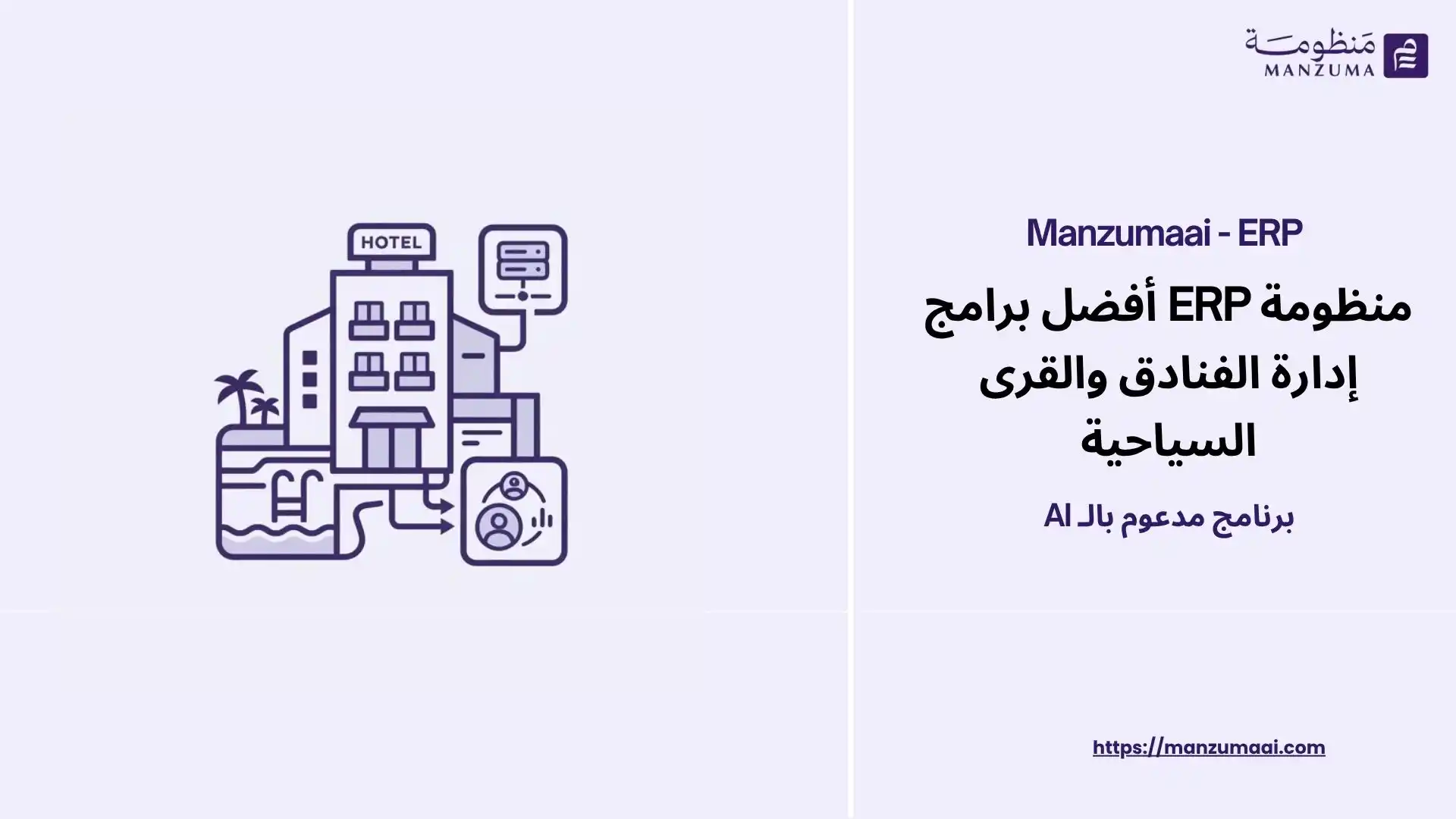
As a hotel or resort business grows, managing bookings, sales, expenses, inventory, and employees across separate systems can become a burden for management. As operations become more complex, the challenge is not simply the amount of data, but how difficult it can be to connect that data and turn it into quick, informed decisions. This is why hotel and resort management software has become an important part of digital transformation, especially when a business relies on a cloud-based ERP system that connects its financial and operational processes in one environment.
What Do Hotels and Resorts Need to Manage Their Operations Efficiently?
Managing a hotel or resort involves much more than recording sales or issuing invoices. It requires a connected operational cycle that includes revenue, purchases, expenses, inventory, employees, point-of-sale operations, and reporting. As the number of units, branches, or points of operation increases, relying on Excel files or separate software systems becomes increasingly difficult.
This is where an ERP system adds real value. It brings essential business data together in a centralized operational system, allowing the impact of a transaction to flow from the sale to the invoice, accounting records, inventory, and reports without requiring the same information to be entered separately by each department. According to Manzuma’s documentation, the platform integrates sales, invoicing, accounting, inventory, and human resources, allowing data to move seamlessly between different business functions.
Effective management is not simply about having software in place; it depends on the system’s ability to connect data and reduce manual work.
How Can Hotel and Resort Management Software Organize Bookings and Revenue?
Hotels and resorts need a clear view of the revenue generated from different sales and services, as well as a clear understanding of how expenses and purchases affect their financial performance. For this reason, operational data should not be isolated from accounting.
With an integrated ERP system, sales, invoicing, accounting, and inventory can be connected within a single data flow. For example, in Manzuma, a sales transaction can be converted into an invoice, with its impact reflected in the customer’s account, accounting records, and inventory when products are included in the transaction.
This gives management a stronger foundation for overseeing:
-
Room and booking management, including occupancy rates.
-
Guest management and customer data and accounts.
-
Accounting and finance, including invoices, revenue, and expenses.
-
Purchasing and supplier management.
-
Inventory, restaurant operations, and operational requirements.
-
Human resources, payroll, and attendance.
-
Maintenance management and issue tracking.
-
POS management for restaurants, cafés, and additional services.
-
Reports and analytics for monitoring performance, revenue, and costs.
Ready to Organize Your Business?
Try Manzuma free for 14 days — no credit card, no commitment.