Back to BlogERP System
How to Evaluate Employee Performance Links To Payroll in ERP
September 13, 2026
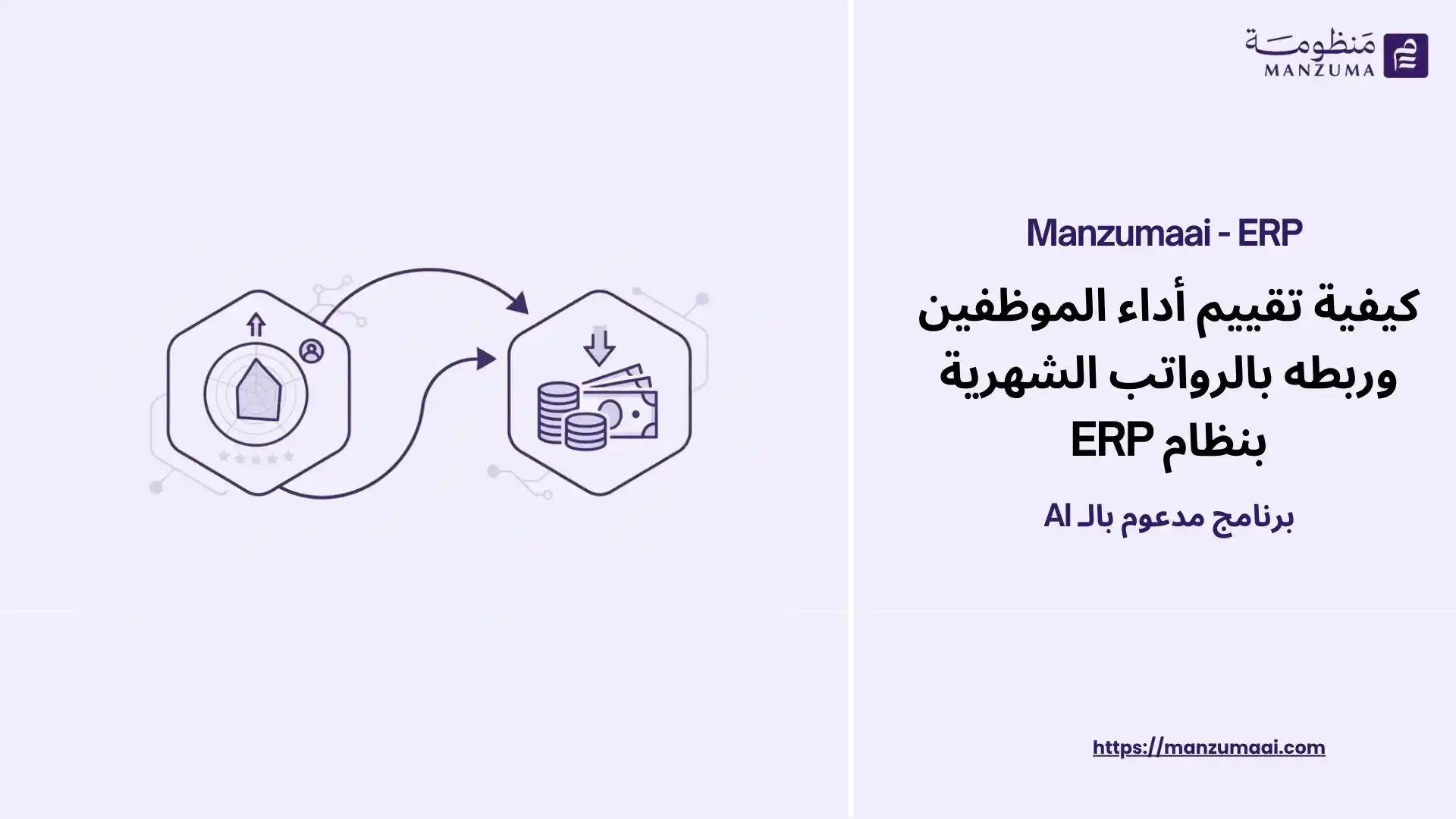
As a company grows, evaluating employee performance can no longer rely solely on personal impressions or a manager’s observations. With more employees, tasks, and branches to manage, decision-makers need clear data to understand productivity, commitment, attendance, and work quality. This is where having a structured approach to employee performance evaluation becomes essential, along with connecting evaluation results to HR data within an ERP system to support more accurate and fair decisions.
What Is Employee Performance Evaluation?
Employee performance evaluation is a structured process used to measure how well an employee meets the tasks, goals, and responsibilities associated with their role over a specific period. Effective evaluation does not focus only on final results. It also considers the quality of work, meeting deadlines, collaboration, skills, and progress toward established goals.
The main purpose is not simply to rank employees, but to use evaluation results to identify strengths, training needs, areas for improvement, and help management make more objective decisions about development, rewards, and future responsibilities.
In short, effective performance evaluation does not only ask, “Did the employee complete their work?” It also asks, “How did they complete it, and what do they need to perform better?”
How to Evaluate Employee Performance Effectively?
A clear evaluation process can be built through a series of practical steps rather than relying on general impressions.
- Set clear goals: Employees should understand what is expected of them and what results they need to achieve during the evaluation period.
- Choose relevant performance indicators: KPIs should vary depending on the role. Sales employees, for example, should not be evaluated using the same indicators as accountants or HR professionals.
- Collect data throughout the period: Companies should not wait until the end of the year to gather information about employee performance.
- Review the results: Actual performance should be compared with the goals and indicators defined in advance.
- Discuss the results with the employee: Employees should receive clear feedback on their strengths and areas that need improvement.
- Create a development plan: Evaluation results should lead to practical actions, such as training, skill development, or redistributing responsibilities.
- Track progress: The most effective performance evaluation is an ongoing process, not a form that is completed just once.
What Are the Most Important Employee Performance Evaluation Criteria?
There is no single set of criteria that works for every company or position. Performance metrics should always reflect the nature of the employee’s role. However, an evaluation process may include:
- Achieving goals and expected results
- Work quality and accuracy
- Meeting deadlines
- Productivity level
- Compliance with company policies and procedures
- Problem-solving ability
- Teamwork and collaboration
- Professional growth and acquisition of new skills
- Level of responsibility and independence
- Customer satisfaction when the role involves customer service
Professional Tip: Avoid using a large number of metrics simply to make the evaluation appear more detailed. A good performance indicator should be clearly measurable and directly related to the employee’s responsibilities.

Ready to Organize Your Business?
Try Manzuma free for 14 days — no credit card, no commitment.