- What Is Human Resource Management?
- Why Human Resource Management Matters
- How Human Resource Management Improves Organizational Performance
- The Impact of Human Resources on Productivity
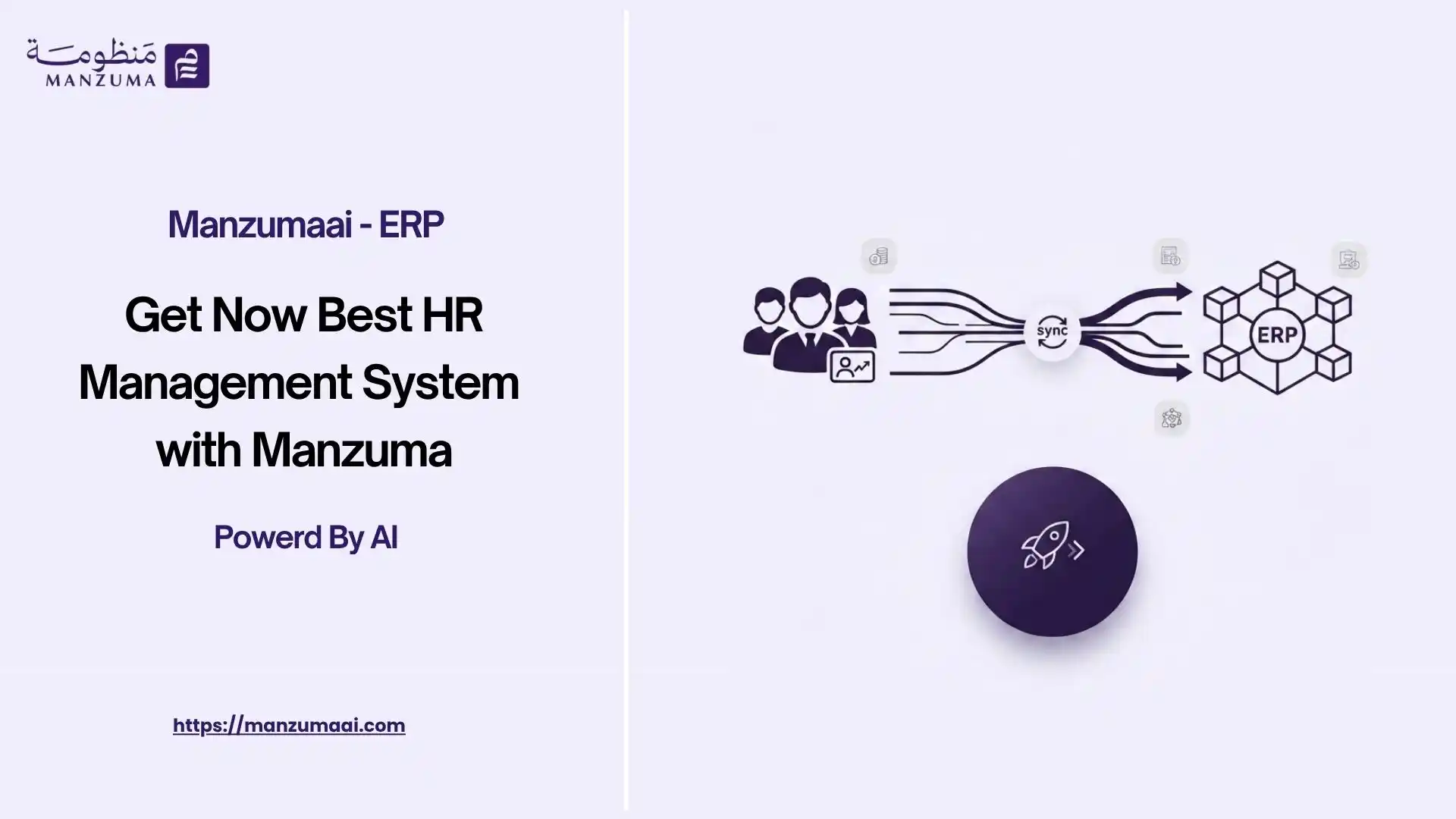
- The Role of ERP Systems in Human Resource Management
- How Automation Enhances Human Resource Management
- The Relationship Between HR, ERP, and Automation
- Key HR Functions Within an ERP System
- How Data Helps HR Improve Organizational Performance
- Human Resources Management And Digital Transformation
- How Does Manzuma AI Help Manage Human Resources And Improve Business Performance?
- Manzuma AI: An AI-Powered And Automated ERP System
- Practical Examples Of ERP And Automation In Human Resources
- Benefits Of Using ERP For Human Resources Management
- How To Choose The Right ERP System For Human Resources Management
- Common Challenges In Traditional Human Resources Management
- The Future Of Human Resources Management With ERP And AI
- Industries Supported By Manzuma AI For Human Resources Management
- Why Choose Manzuma AI For Human Resources Management?
- FAQs
- How Does an ERP System Help With Human Resources Management?
- How Does Automation Support Human Resources Management?
- Can HR Be Connected With Accounting Within an ERP System?
- How Does Manzuma AI Help With Human Resources Management?
- Is Manzuma AI Suitable for Small and Medium-Sized Businesses?
- Does Human Resources Management Affect Productivity?
- Why Do Businesses Need an ERP System for Human Resources Management?
Human Resource Management (HRM) has become one of the most important functions within modern organizations. Business success is no longer determined solely by product quality or sales performance; it largely depends on the people who drive daily operations, serve customers, execute strategies, and achieve business goals.
Employees are the foundation of productivity and organizational growth. As a result, HR is no longer limited to handling recruitment, payroll, and leave management. It has evolved into a strategic function that directly contributes to improving organizational performance and operational efficiency.
With digital transformation accelerating across industries, integrating Human Resource Management with an ERP system and automation has become essential for organizations seeking to reduce errors, streamline processes, organize employee data, and gain better visibility into workforce performance.
In this article, we explore the concept of Human Resource Management, its role in enhancing organizational performance, and how ERP software and automation help transform HR from a traditional administrative function into a smart, data-driven business partner.
What Is Human Resource Management?
Human Resource Management is the department responsible for managing all employee-related activities within an organization. This includes recruitment, onboarding, attendance tracking, payroll management, leave administration, performance evaluations, employee training, and workplace development.
However, modern HR extends far beyond administrative tasks. Today, HR focuses on improving employee experience, increasing productivity, building a strong workplace culture, and aligning employee goals with organizational objectives.
When discussing Human Resource Management and its role in organizational performance, we are talking about a critical business function that influences every department across the company.
Why Human Resource Management Matters
The importance of HR lies in its ability to manage an organization's most valuable asset: its people. Even the best business strategies and technologies cannot deliver results without a capable, motivated, and well-managed workforce.
Effective Human Resource & Payroll Management helps organizations:
- Recruit the right talent.
- Reduce employee turnover.
- Improve team performance.
- Manage payroll, attendance, and leave efficiently.
- Increase employee engagement and accountability.
- Strengthen workplace culture.
- Support employee development and training.
- Improve internal communication.
- Align employee performance with business objectives.
These factors make HR a direct contributor to organizational growth, efficiency, and competitiveness.
How Human Resource Management Improves Organizational Performance
A well structured HR function positively impacts organizational performance in several ways. It helps leadership identify workforce needs, understand team strengths and weaknesses, allocate resources effectively, and improve productivity.
Additionally, HR reduces administrative inefficiencies by replacing paper-based processes and disconnected spreadsheets with centralized, digital systems that streamline attendance, payroll, leave requests, and performance management.
The role of Human Resource Management in improving organizational performance can be summarized in three key areas:
1. Enhancing Employee Productivity
Through training, performance management, employee development, and placing the right people in the right roles, HR helps maximize workforce effectiveness.
2. Streamlining Internal Operations
By managing attendance, payroll, leave, contracts, approvals, and employee records efficiently, HR improves operational consistency and reduces administrative bottlenecks.
3. Supporting Better Decision-Making
HR provides accurate workforce data and insights related to performance, absenteeism, labor costs, productivity, and hiring needs, enabling management to make informed decisions.
The more organized and data-driven HR becomes, the more stable and efficient the organization will be.
The Impact of Human Resources on Productivity
Productivity is influenced by more than just working hours. It depends on effective management, clear responsibilities, employee motivation, and streamlined processes.
When employees understand their roles, receive fair evaluations, have accurate payroll calculations, and see opportunities for growth, they become more engaged and productive.
On the other hand, poorly managed HR processes often result in:
- Payroll delays.
- Attendance inaccuracies.
- Leave management challenges.
- Weak performance evaluation systems.
- Unclear responsibilities.
- Increased employee complaints.
- Higher turnover rates.
- Lower productivity and accountability.
This is why Human Resource Management plays a vital role in transforming workplace environments from disorganized operations into structured, data-driven organizations.
The Role of ERP Systems in Human Resource Management
An ERP (Enterprise Resource Planning) system connects different business functions within a unified platform. When HR is integrated into an ERP system, employee data becomes connected with accounting, payroll, projects, expenses, and reporting modules.
Instead of operating independently from finance and operations, HR data becomes part of a centralized ecosystem where information flows seamlessly across departments.
ERP software helps HR teams:
- Manage employee records.
- Track attendance and working hours.
- Process payroll accurately.
- Manage leave requests and approvals.
- Control user permissions and access rights.
- Integrate payroll with accounting.
- Generate HR reports.
- Monitor workforce costs.
- Manage branches and departments.
- Improve administrative decision-making.
The result is a single source of truth where all departments work with consistent and accurate information.
How Automation Enhances Human Resource Management
Automation transforms repetitive HR tasks into automated workflows, reducing manual effort, saving time, and minimizing errors.
For example, instead of calculating payroll manually every month, an ERP system can automatically process salaries based on attendance records, leave balances, overtime hours, deductions, and allowances.
Similarly, employees can submit leave requests through the system, which are automatically routed to managers for approval.
Common HR automation examples include:
- Automated payroll processing.
- Leave request workflows.
- Attendance and lateness alerts.
- Administrative approval workflows.
- Performance reporting.
- Contract renewal reminders.
- Deductions and benefits management.
- Employee notifications.
- Payroll integration with accounting entries.
Automation not only accelerates processes but also improves accuracy, transparency, and compliance.
The Relationship Between HR, ERP, and Automation
Human Resource Management, ERP systems, and automation work together to create a more efficient organization.
HR requires accurate employee data, ERP provides a centralized platform for managing that data, and automation ensures processes run smoothly with minimal manual intervention.
When combined, organizations can:
- Monitor workforce status in real time.
- Calculate payroll accurately.
- Reduce administrative errors.
- Track attendance and absenteeism.
- Improve employee experience.
- Generate meaningful reports.
- Connect workforce data with operational costs.
- Make data-driven decisions.
This integration transforms HR from an administrative department into a strategic business function.
Key HR Functions Within an ERP System
Modern ERP platforms support a wide range of HR functions, including:
Employee Data Management
Store employee information, contracts, job roles, salaries, documents, and employment history in a centralized database.
Attendance and Time Tracking
Monitor attendance, absences, overtime, and working hours accurately.
Payroll Management
Calculate salaries, deductions, allowances, and benefits automatically while integrating payroll with accounting systems.
Leave and Request Management
Enable employees to submit requests digitally while simplifying approval workflows.
Performance Management
Track productivity, goal achievement, attendance, and performance indicators to support evaluations and promotions.
User Access and Permissions
Control access to sensitive employee and company information based on roles and responsibilities.
HR Reporting and Analytics
Generate reports on workforce costs, turnover rates, attendance patterns, productivity, and employee performance.
How Data Helps HR Improve Organizational Performance
Modern HR relies heavily on data and analytics to support decision-making.
By leveraging ERP-generated reports, organizations can answer critical questions such as:
- Which departments are most productive?
- Where are attendance issues occurring?
- Who are the highest-performing employees?
- What is the cost of each department?
- Are compensation levels aligned with performance?
- Is additional hiring required?
- Why are employees leaving?
- Are training programs delivering results?
These insights enable HR to support business leaders with strategic recommendations based on facts rather than assumptions.
Human Resources Management And Digital Transformation
Digital transformation is not just about adopting new technology. It means changing the way an organization operates. In human resources, digital transformation helps businesses move away from manual processes and adopt smarter, data-driven systems supported by automation.
Organizations that embrace digital transformation in HR can:
- Reduce paperwork and manual processes.
- Speed up approval workflows.
- Improve payroll accuracy.
- Manage employee information more efficiently.
- Access HR reports whenever needed.
- Improve workforce planning.
- Reduce operational costs.
That is why integrating HR with an ERP system is an important step in any organization’s digital transformation journey.
How Does Manzuma AI Help Manage Human Resources And Improve Business Performance?
Manzuma AI provides a complete cloud-based ERP system that helps businesses manage their operations from one platform, including human resources, payroll, attendance, and reporting.
With Manzuma AI, businesses can organize employee data, track attendance, calculate payroll, and manage HR-related processes more efficiently and accurately. The system also connects HR with other business functions, such as accounting and reporting, giving management better visibility into employee costs and overall business performance.
Instead of relying on multiple files and disconnected systems, Manzuma AI provides a unified environment for managing employees and daily operations in a more organized way.
Manzuma AI: An AI-Powered And Automated ERP System
Benefits of AI in Project Management For ERP Systems is reflected in how businesses can use AI to speed up workflows, analyze data, automate tasks, and improve decision-making. Manzuma AI is more than a data management tool; it is a cloud-based ERP platform powered by artificial intelligence.
With an AI assistant like Munjiz AI, users can access business data, request reports, and interact with the system more easily. This makes day-to-day management more flexible, especially for businesses that need quick access to information to make timely decisions.
In HR management, this means businesses can easily monitor key employee data, reduce the time spent on manual tasks, and connect HR with other business operations.
Practical Examples Of ERP And Automation In Human Resources
Example 1: Automated Payroll Calculation
Instead of calculating payroll manually every month, the system calculates salaries based on attendance, absences, leave, deductions, allowances, and overtime hours.
Example 2: Paperless Leave Requests
Employees can submit leave requests directly through the system. The request is automatically sent to the responsible manager, and the employee’s leave balance is updated after approval.
Example 3: Employee Cost Reports
Management can view the cost of employees by department or branch through clear reports that support financial planning and better decision-making.
Example 4: Absence And Late-Arrival Alerts
When repeated absences or late arrivals occur, the system can highlight them in reports, helping HR teams take action at the right time.
Example 5: Connecting Payroll With Accounting
Once payroll is approved, it can be connected with accounting and financial entries, reducing manual data entry and helping the finance team work more accurately.
Benefits Of Using ERP For Human Resources Management
Using an ERP system for HR management can provide organizations with several benefits, including:
Reducing Errors
The system reduces reliance on manual data entry and separate spreadsheets.
Saving Time
Automating payroll, leave requests, reports, and approvals helps HR teams save valuable time.
Improving Transparency
Employees and managers can access relevant data and follow HR processes more clearly.
Supporting Decision-Making
Reports help management understand employee performance, costs, and workforce needs.
Increasing Productivity
When manual tasks are reduced, HR teams can focus more on employee development and improving the workplace.
Improving Compliance And Organization
The system helps maintain employee data, organize processes, and reduce inconsistencies.
Connecting HR With Finance
This gives organizations a clearer view of actual employee costs and their impact on overall business performance.
Key HR Metrics To Track For Better Performance
To help HR teams improve organizational performance, it is important to monitor key metrics such as:
- Attendance and absence rates.
- Late-arrival rates.
- Employee turnover rate.
- Payroll costs.
- Team productivity.
- Number of leave requests.
- Approval processing time.
- Performance evaluation results.
- Training needs.
- Employee satisfaction.
- Cost per department or branch.
These metrics help organizations understand their current performance, identify problems, and develop practical improvement plans.
How To Choose The Right ERP System For Human Resources Management
When choosing an ERP system for HR management, businesses should look for a solution that provides:
- Employee record management.
- Attendance and time tracking.
- Payroll management.
- Leave management.
- Clear and comprehensive reports.
- User roles and permissions.
- Accounting integration.
- Automation for repetitive tasks.
- An easy-to-use interface.
- A cloud-based platform that can be accessed easily.
- AI capabilities or a smart assistant.
- Scalability as the business grows.
Choosing the right system does more than organize HR operations. It helps the entire organization work more efficiently.
Common Challenges In Traditional Human Resources Management
Many organizations still rely on traditional HR processes, which can create several challenges, including:
- Relying solely on Excel spreadsheets.
- Delays in updating employee information.
- Payroll calculation errors.
- Difficulty tracking leave balances.
- Lack of accurate reports.
- Poor integration between HR and accounting.
- Lack of clear performance metrics.
- Difficulty tracking employee costs.
- Delays in administrative approvals.
These issues may seem minor at first, but they can affect organizational performance over time. That is why adopting ERP and automation can be an important step toward reducing risks and improving HR management.
The Future Of Human Resources Management With ERP And AI
The future of HR management is moving toward greater automation and smarter, data-driven processes. Instead of spending most of their time on repetitive administrative tasks, HR teams can focus more on data analysis, employee development, workplace culture, and supporting management decisions.
ERP systems are expected to become increasingly capable of:
- Analyzing employee performance.
- Predicting workforce needs.
- Identifying attendance issues earlier.
- Providing intelligent reports.
- Improving communication with employees.
- Automating more HR processes.
- Enhancing the employee experience.
- Connecting performance with costs and business results.
This makes HR more influential in improving organizational performance, as it evolves from an administrative function into a more strategic part of the business.
Industries Supported By Manzuma AI For Human Resources Management
Manzuma AI helps businesses across different industries organize HR operations and manage employees through one ERP platform, connecting employee data with attendance, payroll, leave management, and reporting. Industries that can benefit from Manzuma AI include:
-
Construction & Contracting: Manage employees and workers, allocate teams, and track attendance and payroll.
-
Manufacturing: Organize employee data, shifts, attendance, and payroll.
-
Trading & Distribution: Manage employees, branches, attendance, payroll, and user permissions.
-
Services & Consulting: Manage employees, leave, performance, and payroll.
-
Restaurants & Hospitality: Manage teams, shifts, attendance, and payroll.
-
Healthcare: Organize employee data, shifts, attendance, leave, and payroll.
-
E-Commerce: Manage sales, operations, and customer service teams, along with attendance and payroll.
Why Choose Manzuma AI For Human Resources Management?
- If your business needs an easier way to manage HR, payroll, attendance, and reports, Manzuma AI helps you handle these processes through one cloud-based ERP system.
- Manzuma AI provides clearer visibility into employee data, reduces manual processes, and connects HR with accounting and other business operations. With AI and automation, daily HR management becomes faster and more efficient.
- Manzuma AI is suitable for businesses looking to move from traditional HR processes to a more organized and intelligent approach.
- Human resources management is no longer limited to payroll and recruitment. HR has become a strategic function that can influence productivity, performance, workplace culture, and the overall employee experience.
- With ERP and automation, organizations can organize employee data, improve payroll accuracy, speed up processes, generate valuable reports, and connect HR with other departments.
Human Resource Management plays a critical role in improving organizational performance by enhancing productivity, strengthening workplace culture, supporting employee development, and improving operational efficiency.
When combined with ERP software, automation, and AI-powered technologies, HR becomes more strategic, data-driven, and impactful. Organizations gain better control over employee data, payroll, attendance, reporting, and workforce planning while reducing administrative burdens.
For businesses looking to improve productivity, streamline operations, and support sustainable growth, investing in an ERP-powered Human Resource Management solution is no longer optional—it is a strategic necessity.
FAQs
How Does an ERP System Help With Human Resources Management?
An ERP system brings employee data, attendance, payroll, leave management, and HR reports together in one system, while connecting them with accounting and other business functions.
How Does Automation Support Human Resources Management?
Automation handles repetitive tasks such as payroll calculations, leave requests, approvals, notifications, and report generation, helping save time and reduce errors.
Can HR Be Connected With Accounting Within an ERP System?
Yes. Payroll, employee benefits, deductions, and other HR-related costs can be linked with accounting, helping improve the accuracy of financial entries and providing a clearer view of employee costs.
How Does Manzuma AI Help With Human Resources Management?
Manzuma AI helps businesses manage employee records, attendance, payroll, and HR reports through an integrated cloud ERP system powered by AI and automation.
Is Manzuma AI Suitable for Small and Medium-Sized Businesses?
Yes. Manzuma AI is suitable for businesses looking to organize their operations and reduce reliance on manual files, whether they are small businesses, medium-sized companies, or growing organizations.
Does Human Resources Management Affect Productivity?
Yes. Organized employee management, clear roles, accurate payroll, performance tracking, and a better employee experience can all contribute to improving organizational productivity.
Why Do Businesses Need an ERP System for Human Resources Management?
An ERP system helps unify data, automate HR processes, connect human resources with finance, and give management better visibility into employee performance and business operations, supporting more informed decision-making.
Ready to Organize Your Business?
Try Manzuma free for 14 days — no credit card, no commitment.