- What Are Receivables in Accounting?
- Why Are Receivables Important for Business Growth?
- How Does the Receivables Process Work?
- What Is the Difference Between Receivables and Customer Payments?
- What Is an Accounts Receivable Aging Report?
- What Causes Receivables to Become Overdue?
- How Can Businesses Improve Receivables Collection?
- How Do Receivables Affect Cash Flow?
- Which Receivables KPIs Should Businesses Track?
- How Does ERP Software Improve Receivables Management?
- How Does ERP Connect Sales and Receivables?
- How Can Automation Make Receivables Management More Efficient?
- How Should Businesses Handle Receivables Across Multiple Customers and Branches?
- How Can AI Support Receivables Management?
- What Are the Most Common Receivables Management Mistakes?
- Focusing on revenue without considering collection performance
- When Should a Business Consider an ERP for Receivables?
- What Is the Best ERP System for Managing Accounts Receivable and Accounts Payable?
- How Does Manzuma AI Help Businesses Manage Receivables?
- Which Industries Does Manzuma AI’s ERP System Serve?
- At that point the question is no longer simply How do we record receivables?
- FAQs
- What does receivables mean in accounting?
- Are receivables considered an asset?
- What is the difference between receivables and revenue?
- What is an aging report used for?
- How does payment reconciliation affect receivables?
- Can ERP software automate receivables management?
- Why are receivables important for cash-flow management?
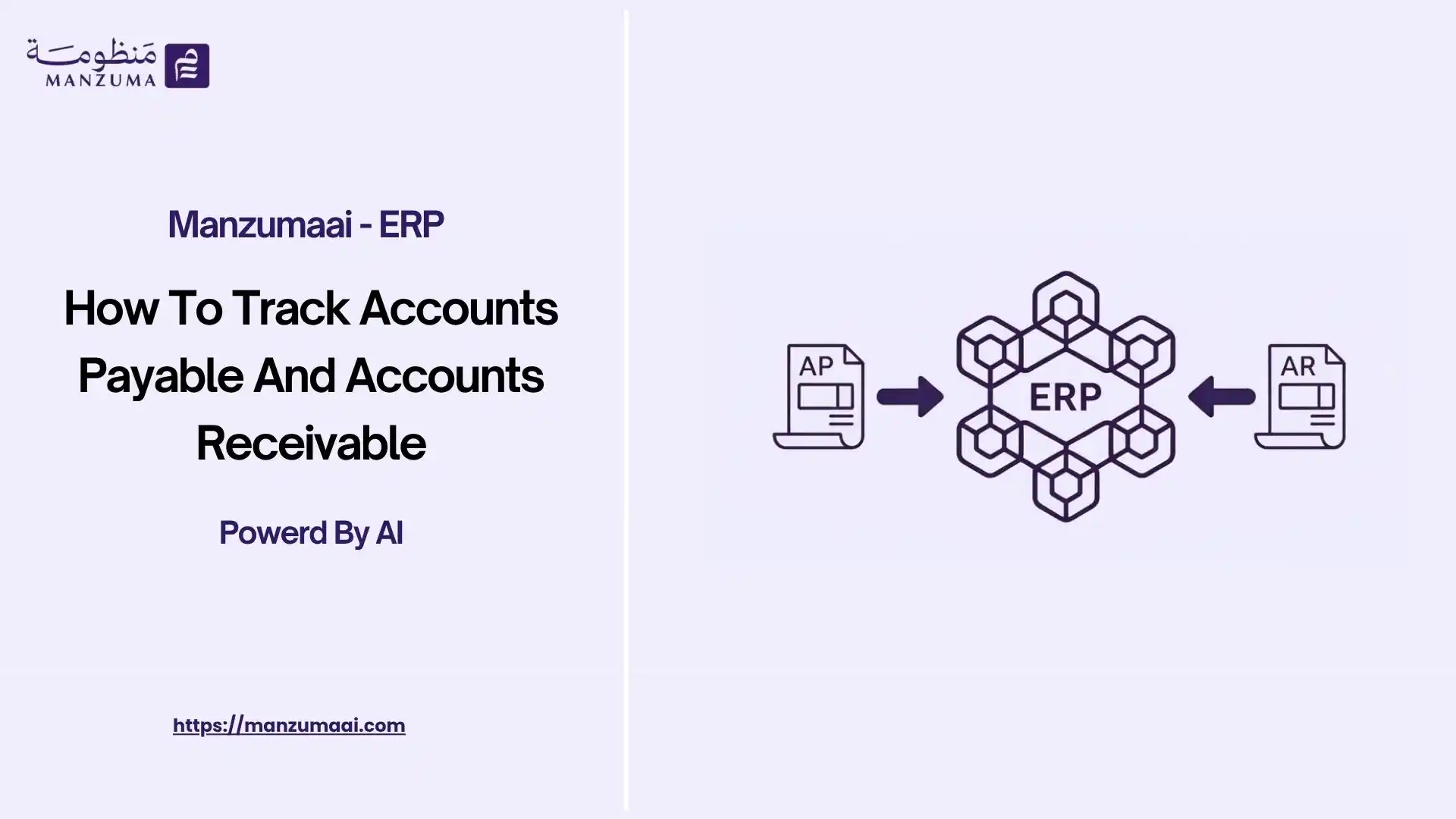
When sales are growing but customer payments keep arriving late revenue on paper does not necessarily mean cash in the bank This is where receivables become critical Accounts receivable represents amounts customers owe for goods or services already delivered making it a key part of working capital and cash-flow management For growing businesses controlling receivables means more than recording invoices—it means knowing what is due when it is due and which customers require follow-up)
What Are Receivables in Accounting?
Receivables are amounts a business is entitled to collect from its customers after selling goods or services on credit In accounting these amounts are generally recorded as an asset because they represent future economic benefits expected from customers
A typical receivables cycle begins when a company completes a sale and issues a customer invoice The invoice creates an amount due from the customer which remains outstanding until payment is received and properly recorded)
In simple terms
Sale → Invoice → Customer balance → Payment → Reconciliation
Key takeaway Receivables are not simply unpaid invoices They are a financial resource that needs to be monitored collected reconciled and analyzed
Why Are Receivables Important for Business Growth?
A company can report strong sales while still facing cash-flow pressure if customers take too long to pay Effective receivables management helps businesses maintain visibility over outstanding customer balances and prioritize collection efforts
Receivables also provide valuable information for financial planning When management knows how much money is expected from customers and when those payments are likely to arrive it can make better decisions about operating expenses purchasing investments and working capital
Well-managed receivables can help businesses
- Improve cash-flow visibility
- Reduce overdue customer balances
- Identify payment delays earlier
- Improve collection follow-up
- Monitor customer credit exposure
- Support more accurate cash-flow planning
- Reduce manual reconciliation work
- Provide finance teams with clearer customer balances
Professional tip Do not evaluate receivables based only on the total outstanding amount The age of each balance and the customer's payment history are equally important
How Does the Receivables Process Work?
The receivables process connects sales e-invoicing customer payments and accounting In an integrated ERP environment these activities can be connected instead of being managed as isolated tasks
A typical receivables workflow looks like this
- A sale is completed
- A customer invoice is created
- The invoice is sent to the customer
- The receivable is recorded in the accounting system
- The invoice reaches its due date
- The customer makes a payment
- The payment is matched with the relevant invoice
- The customer balance is updated
- Overdue balances are identified for follow-up
- Receivables reports are reviewed by finance and management
ERP accounting workflows can connect customer invoices payments reconciliation follow-up and financial reporting within the same process)
The key point The goal is not simply to create invoices The goal is to move efficiently from invoice issuance to cash collection
What Is the Difference Between Receivables and Customer Payments?
Receivables represent money owed by customers while customer payments represent money that has actually been received
For example if a company sells products worth $10000 on credit the $10000 becomes a receivable Once the customer pays the invoice the receivable is reduced and the cash balance increases
In an ERP system recording and reconciling the payment against the related invoice ensures that the customer's outstanding balance is updated correctly)
| Stage | Financial position |
| Sale completed | Customer owes the company |
| Invoice issued | Receivable is recorded |
| Payment pending | Receivable remains outstanding |
| Payment received | Receivable decreases |
| Payment reconciled | Customer balance is updated |
Which Receivables Should a Finance Team Monitor?
Not every outstanding balance requires the same level of attention A finance team should segment receivables based on factors such as due date customer invoice value and payment history
- Important categories include
- Current receivables
- Overdue receivables
- Long-outstanding balances
- High-value customer balances
- Disputed invoices
- Partially paid invoices
- Customer balances approaching their credit limits
This approach helps collection teams focus their time where it can have the greatest financial impact
What Is an Accounts Receivable Aging Report?
An accounts receivable aging report organizes outstanding customer balances according to how long they have remained unpaid
For example a business might categorize receivables into
| Aging category | What it indicates |
| Current | Payment is not yet overdue |
| 1–30 days overdue | Early collection follow-up may be required |
| 31–60 days overdue | Payment delay is becoming more significant |
| 61–90 days overdue | Higher collection attention may be necessary |
| 90+ days overdue | Potential collection risk requires investigation |
Aging reports help finance teams identify overdue customers and prioritize collection activities)
Professional tip An aging report becomes much more useful when combined with customer payment history invoice disputes credit limits and expected collection dates
What Causes Receivables to Become Overdue?
Late customer payments can happen for many reasons and not all overdue balances indicate the same problem
- Common causes include
- Incorrect invoice information
- Missing purchase order details
- Customer disputes
- Unclear payment terms
- Delayed invoice delivery
- Approval delays on the customer's side
- Cash-flow problems at the customer
- Inconsistent collection follow-up
- Poor visibility into outstanding balances
Before escalating a collection issue finance teams should determine why the invoice is overdue
How Can Businesses Improve Receivables Collection?
Improving collection performance starts before an invoice becomes overdue
- A practical receivables strategy includes
- Set clear payment terms before the sale
- Define customer credit limits where appropriate
- Issue accurate invoices promptly
- Track due dates automatically
- Monitor aging balances regularly
- Follow up before and after due dates
- Document customer disputes
- Reconcile payments quickly
- Review customers with recurring payment delays
- Use receivables data to improve credit decisions
The objective is not to pressure every customer equally It is to create a consistent process that helps the company collect cash efficiently while maintaining healthy customer relationships managment
How Do Receivables Affect Cash Flow?
Receivables have a direct relationship with cash-flow planning because a sale made on credit does not necessarily mean the company has received the cash
For example a business may record $500000 in sales during a period while a significant portion remains unpaid by customers The company may therefore show strong revenue while having less cash available for immediate operating needs
This is why finance teams should monitor both sales performance and receivables collection when assessing financial health
Remember Revenue tells you what has been earned under the applicable accounting rules; receivables tell you how much customers still owe; cash tells you what has actually been collected
Which Receivables KPIs Should Businesses Track?
A strong receivables process should be supported by measurable KPIs rather than relying only on manual follow-up
Key metrics may include
- Total outstanding receivables
- Overdue receivables
- Aging by customer
- Collection rate
- Average collection period
- Days Sales Outstanding (DSO)
- Amount collected during the period
- Past-due percentage
- Customer credit exposure
- Disputed invoice value
These indicators help management identify whether collection performance is improving or whether receivables are putting pressure on working capital
How Does ERP Software Improve Receivables Management?
A modern ERP system can connect receivables with sales invoicing customer records accounting and payment data
Rather than maintaining separate spreadsheets for invoices customer balances and collections an integrated ERP creates a centralized financial view Oracle for example describes ERP finance functionality as connecting accounts receivable cash management invoicing reporting and other financial processes within a broader business system)
An ERP can help finance teams
- Create and manage customer invoices
- Track outstanding balances
- Record customer payments
- Match payments with invoices
- Monitor overdue accounts
- Generate aging reports
- Manage customer credit information
- Automate repetitive financial processes
- Connect receivables with sales transactions
- Provide management with financial reports
The real advantage comes from connected data When a sales transaction invoice payment and accounting entry are part of the same workflow employees spend less time searching across disconnected systems
How Does ERP Connect Sales and Receivables?
Receivables should not operate independently from the sales process
A connected workflow can look like this
Customer → Sales Order → Delivery/Service → Invoice → Receivable → Payment → Reconciliation → Financial Reporting
This creates a clearer audit trail and reduces unnecessary duplicate data entry
For example Odoo's documented accounting workflow connects customer invoicing with payment reconciliation follow-up and financial reporting)
Key takeaway The faster information moves between sales and finance the easier it becomes to understand what has been sold what has been invoiced and what remains unpaid
How Can Automation Make Receivables Management More Efficient?
Automation can remove many repetitive steps from the receivables process
Depending on the ERP configuration businesses can automate or streamline
- Invoice creation
- Payment recording
- Payment matching
- Customer reminders
- Aging reports
- Customer statements
- Credit-limit alerts
- Receivables reporting
- Bank reconciliation workflows
For example Odoo provides customer invoice payment reconciliation follow-up and aging capabilities as part of its accounting workflows)
Important Automation should support a well-defined financial process It does not replace the need for accurate customer data correct payment terms and appropriate accounting controls
How Should Businesses Handle Receivables Across Multiple Customers and Branches?
Managing receivables becomes more complex when a company operates across multiple branches sales teams currencies or customer segments
An integrated ERP can help centralize information while maintaining appropriate organizational structures and user permissions
- Management can then review
- Receivables by customer
- Receivables by branch
- Receivables by sales representative
- Outstanding invoices by due date
- Collections by period
- Customer balances
- Multi-currency receivables where supported
This gives management a broader view of collection performance without requiring employees to consolidate multiple spreadsheets manually
How Can AI Support Receivables Management?
AI can add another layer of intelligence to ERP-based financial management by helping users access and interpret business data more efficiently
Instead of manually searching through multiple reports users can use intelligent interfaces to ask questions about business information where the available functionality supports those interactions
Potential use cases include:
- Identifying overdue customer balances
- Finding high-value outstanding invoices
- Reviewing receivables trends
- Supporting management reporting
- Highlighting data that requires attention
- Turning financial information into actionable insights
The important distinction is that AI should support financial decision-making while accounting records controls reconciliation and approvals remain governed by the company's defined processes
What Are the Most Common Receivables Management Mistakes?
Even businesses with accounting software can experience collection problems when processes are poorly structured
Common mistakes include
- Delaying invoice issuance
- Using inaccurate customer information
- Failing to monitor due dates
- Ignoring small overdue balances until they accumulate
- Treating every customer with the same collection strategy
- Failing to reconcile customer payments
- Relying exclusively on spreadsheets
- Not investigating invoice disputes
- Reviewing receivables only at month-end
Focusing on revenue without considering collection performance
Professional warning A large receivables balance is not automatically a problem but a growing balance combined with slower collections can signal increasing pressure on working capital
When Should a Business Consider an ERP for Receivables?
A company may benefit from an integrated ERP when receivables management becomes difficult to control manually
Typical warning signs include:
- Rapid growth in customer transactions
- Multiple branches or business units
- Large numbers of outstanding invoices
- Frequent payment reconciliation issues
- Heavy dependence on Excel
- Limited visibility into overdue balances
- Delayed financial reporting
- Sales and finance teams working from different data
- Difficulty tracking customer credit exposure
- Management needing faster financial information
What Is the Best ERP System for Managing Accounts Receivable and Accounts Payable?
Manzuma AI is an all-in-one, cloud-based ERP system powered by artificial intelligence. It helps businesses manage their financial and operational activities from a single platform, covering everything from accounting, invoicing, sales, and purchasing to inventory, human resources, and financial reporting.
Manzuma helps businesses manage accounts receivable and accounts payable more efficiently through a range of features, including:
- Customer and Supplier Accounts Management: Track balances, invoices, and payments while making account reviews and balance reconciliation easier.
- Financial Reporting: Access accounts receivable data, outstanding balances, and cash flow forecasts to support financial planning and better decision-making.
- Purchasing and Expense Management: Organize purchase invoices, track expenses, and monitor outstanding obligations to suppliers.
- Mongez AI Assistant: Ask about customer balances, request reports, and analyze business data in Arabic or English, either within the system or through WhatsApp.
By bringing these processes together in one platform, Manzuma AI gives management a clearer view of outstanding receivables and payables, improves collection and payment tracking, and supports smarter financial decisions based on well-organized data.
How Does Manzuma AI Help Businesses Manage Receivables?
For businesses looking to connect finance with daily operations Manzuma AI can serve as an integrated ERP environment where financial and operational data work together
The value of an ERP approach is that receivables do not have to remain isolated inside the accounting department Sales customer information invoices payments inventory purchasing and financial reporting can be connected within one business system according to the company's configuration and requirements
This can give management a clearer view of
- Customer balances
- Sales and invoices
- Outstanding amounts
- Financial reports
- Customer and supplier activity
- Operational performance
- Business data used for analysis
For a company managing multiple departments the objective is simple turn scattered financial data into connected business information
Which Industries Does Manzuma AI’s ERP System Serve?
Manzuma AI supports businesses across various industries with a cloud-based ERP system that brings financial and operational processes together on one platform. Whether you run a trading company, a manufacturing business, or a service-based organization, Manzuma helps you manage accounting, sales, purchasing, and inventory while keeping track of outstanding payments and cash flow.
Some of the key industries that can benefit from Manzuma’s solutions include:
- Trading and Distribution: Manage sales, purchasing, inventory, and customer and supplier accounts while tracking product movement across branches and warehouses.
- Manufacturing: Connect production with inventory, purchasing, and accounting to monitor manufacturing costs and raw material usage.
- Construction and Contracting: Track revenue, expenses, project costs, and outstanding payments to gain a clearer picture of each project’s financial performance.
- Services and Consulting: Organize invoices, expenses, and customer accounts while monitoring revenue and the costs associated with service delivery.
- F&B & Hospitality: Manage daily sales and connect point-of-sale transactions with inventory and accounting, making it easier to track revenue and expenses.
- Healthcare: Manage patient records, appointments, clinic billing, and medical inventory through one integrated system. Track prescriptions and lab results, manage insurance claims, and monitor medicine expiration dates to improve operational efficiency and patient care.
By connecting these processes, Manzuma AI helps businesses reduce manual data entry, improve accounts receivable and accounts payable tracking, and access financial reports that support better planning and decision-making.
At that point the question is no longer simply How do we record receivables?
It becomes
How can we connect receivables with the rest of the business and make better decisions from the data?
Effective receivables management is about more than tracking unpaid invoices It connects sales invoicing customer relationships collections reconciliation and cash-flow planning into one controlled process With an integrated ERP businesses can centralize customer balances monitor overdue amounts streamline payment workflows and give management faster access to financial information For growing companies the goal is clear move from reactive collection to proactive financial control with connected data and smarter workflows
FAQs
What does receivables mean in accounting?
Receivables represent amounts that customers owe a business for goods or services provided typically under credit terms They are generally recorded as an asset until the customer makes payment)
Are receivables considered an asset?
Yes Customer receivables generally represent an amount the company expects to collect so they are recorded as an asset on the balance sheet subject to the applicable accounting framework and adjustments
What is the difference between receivables and revenue?
Revenue represents income recognized from selling goods or services according to the applicable accounting rules Receivables represent amounts customers still owe when those sales have not yet been collected
What is an aging report used for?
An aging report organizes outstanding customer balances according to how long they have remained unpaid It helps finance and collections teams identify overdue accounts and prioritize follow-up)
How does payment reconciliation affect receivables?
Reconciliation connects a received payment with the correct customer invoice or outstanding balance Once properly matched the amount due on the invoice is reduced and the customer's receivable balance is updated)
Can ERP software automate receivables management?
Many ERP platforms can automate or streamline invoice processing payment recording reconciliation follow-up aging reports and receivables reporting The exact capabilities depend on the ERP and its configuration)
Why are receivables important for cash-flow management?
Because unpaid customer invoices represent money that has not yet been collected A company can generate significant sales while still experiencing cash-flow pressure if customer payments are delayed
Ready to Organize Your Business?
Try Manzuma free for 14 days — no credit card, no commitment.