- What Is Inventory Management?
- Why Inventory Management Matters
- Understanding Inventory Management Systems
- Why Modern Businesses Are Moving to Cloud ERP Inventory Management
- What’s Next: Inventory Management With ERP and AI?
- Core Inventory Management Responsibilities
- Product Classification and Inventory Organization
- How to Choose the Right Inventory Management Software
- Why Businesses Choose AI Manzuma for Inventory Management
- Key Inventory Management Features in AI Manzuma
- Transform Inventory Data into Business Intelligence
- Use Artificial Intelligence to Optimize Inventory Decisions
- Streamline Procurement with Intelligent Inventory Automation
- Improve Warehouse Productivity Through Automation
- Gain Complete Visibility Across Every Warehouse
- Why AI Manzuma Is More Than Inventory Software
- Industries Served by Manzuma AI for Inventory Management
- Future-Proof Your Inventory Operations
- FAQs
- What is inventory management software?
- How does AI Manzuma improve inventory management?
- Can AI Manzuma manage multiple warehouses?
- Does AI Manzuma support automated inventory replenishment?
- Is AI Manzuma suitable for growing businesses?
Optimize Inventory, Reduce Costs, and Improve Supply Chain Performance with AI-Powered ERP
Inventory is more than a collection of products sitting on warehouse shelves It's one of the most valuable business assets directly influencing cash flow, purchasing decisions, operational efficiency, and customer satisfaction.
Poor inventory management often leads to stock shortages, overstocking, delayed deliveries, unnecessary purchasing costs, and reduced profitability.
As businesses grow, managing inventory through spreadsheets or disconnected software becomes increasingly inefficient. Companies need real-time visibility into stock levels, purchasing activities, warehouse movements, and supplier performance.
An integrated ERP platform like Manzuma AI transforms inventory management into a centralized intelligent process by connecting warehouses, procurement, accounting, sales, and business analytics within a single cloud based system.
What Is Inventory Management?
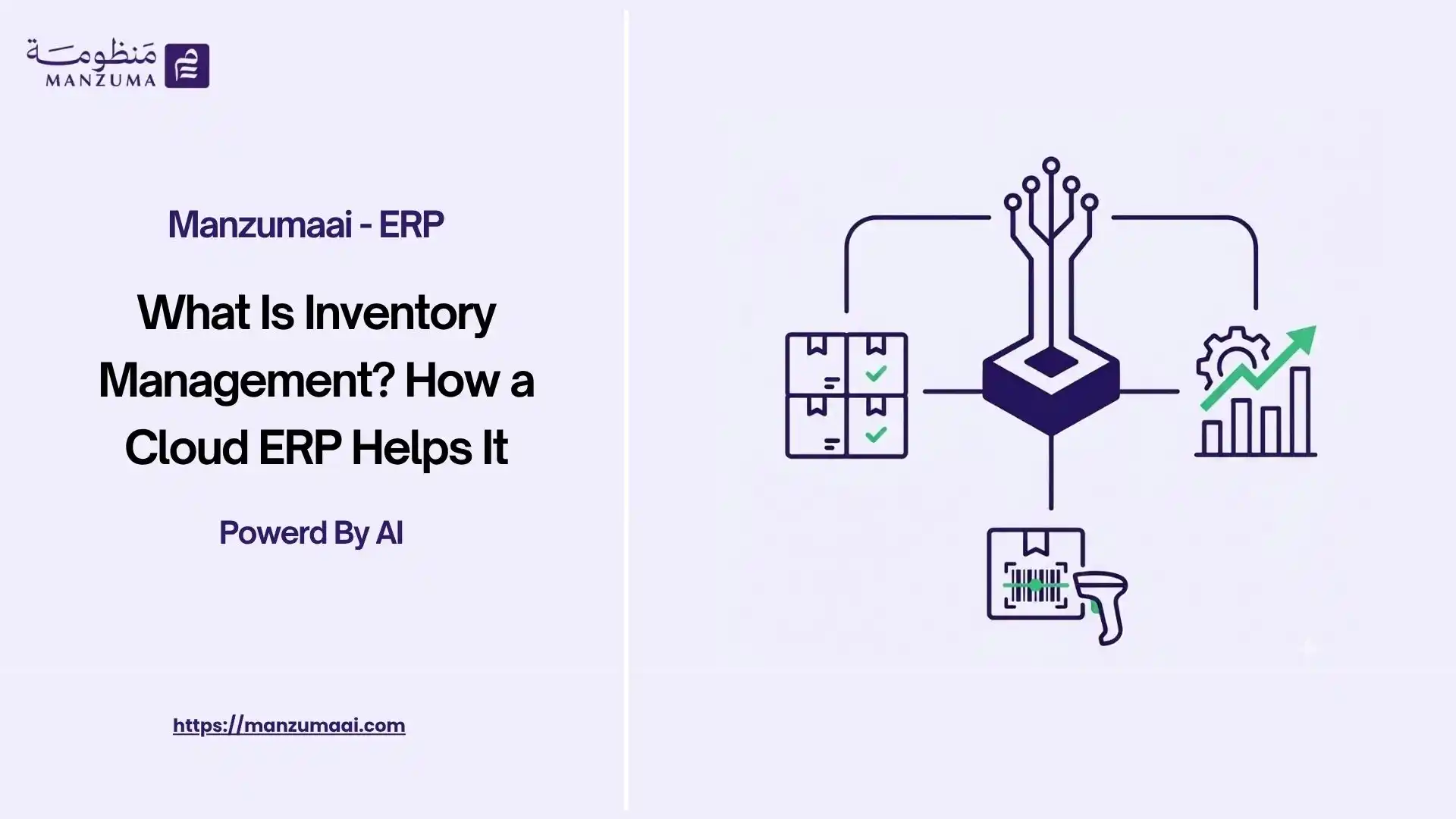
Inventory management is the process of planning, tracking, controlling, and optimizing the movement of goods throughout the entire supply chain.
It covers every stage of the inventory lifecycle—from purchasing raw materials and receiving products to warehouse storage, stock transfers, sales fulfillment, and replenishment.
The primary objective is simple:
Maintain the right inventory levels at the right time while minimizing operational costs and avoiding unnecessary stock shortages or excess inventory.
Modern inventory management systems also provide businesses with complete visibility into inventory performance enabling faster and more informed business decisions.
A comprehensive inventory management solution allows organizations to:
- Monitor inventory levels in real time.
- Track product movement across warehouses.
- Automate stock updates after every transaction.
- Improve purchasing accuracy.
- Reduce inventory carrying costs.
- Prevent stockouts and overstock situations.
- Support long-term business planning with accurate inventory data.
Instead of relying on manual inventory tracking, organizations gain a connected system where operational and financial data work together.
Why Inventory Management Matters
Inventory directly impacts nearly every business function.
From procurement and warehouse operations to finance and customer service inventory serves as the foundation for efficient business performance.
Companies that implement structured inventory management typically experience improvements in both operational efficiency and profitability.
Key business benefits include:
Improve Inventory Accuracy
Real-time inventory tracking minimizes discrepancies between recorded and physical stock helping businesses maintain reliable inventory data.
Reduce Operating Costs
Optimized inventory levels reduce storage expenses, unnecessary purchases, product obsolescence, and excess working capital tied up in inventory.
Support Better Purchasing Decisions
Procurement teams can make informed purchasing decisions based on actual demand, supplier performance, and current inventory availability.
Prevent Stock Shortages
Automated inventory monitoring ensures critical products remain available reducing lost sales and improving customer satisfaction.
Increase Warehouse Efficiency
Organized inventory processes simplify receiving, storage, picking, transfers, and fulfillment operations while reducing manual work.
Improve Business Planning
Comprehensive inventory reports help management forecast demand, allocate resources effectively, and prepare for seasonal fluctuations.
Inventory management is no longer just an operational process—it's a strategic business function that drives sustainable growth.
Understanding Inventory Management Systems
Not every business requires the same inventory management approach.
The right inventory system depends on business size, operational complexity, transaction volume, and reporting requirements.
Most organizations rely on one of two inventory management methods.
Periodic Inventory System
The periodic inventory system updates inventory records at scheduled intervals rather than after every transaction.
Businesses typically perform inventory counts monthly, quarterly, or annually to reconcile physical inventory with accounting records.
This method is commonly used by organizations with:
- Limited product catalogs.
- Low transaction volumes.
- Small warehouse operations.
- Basic inventory reporting needs.
Although simple to manage periodic inventory provides limited visibility into daily inventory activity and may delay operational decision-making.
Perpetual Inventory System
A perpetual inventory system continuously updates inventory records whenever products are purchased, sold, transferred, received, or issued.
Every inventory movement is recorded automatically giving businesses immediate visibility into stock availability and inventory valuation.
Organizations benefit from:
- Real-time inventory tracking.
- Instant stock availability.
- Automated inventory adjustments.
- Improved purchasing decisions.
- Accurate financial reporting.
- Faster warehouse operations.
- Reduced human error.
For growing, businesses with multiple warehouses branches or high transaction volumes perpetual inventory management provides the accuracy and transparency required for efficient operations.
Why Modern Businesses Are Moving to Cloud ERP Inventory Management
Traditional inventory software often operates independently from accounting, procurement, sales, and warehouse operations.
As a result, teams spend valuable time manually updating data across multiple systems increasing the risk of inconsistencies and operational delays.
ai powered cloud erp eliminate these challenges by connecting inventory with every core business function.
With AI Manzuma businesses can:
- Synchronize inventory and purchasing automatically.
- Connect warehouse operations with accounting.
- Share real-time inventory data across departments.
- Monitor stock movements from a centralized dashboard.
- Improve collaboration between procurement, finance, and warehouse teams.
- Access inventory information securely from anywhere.
Rather than managing inventory in isolation organizations gain a unified operational environment where every business process is connected through one intelligent ERP platform.
What’s Next: Inventory Management With ERP and AI?
In the next section we'll explore:
- Core inventory management responsibilities.
- How to choose the right inventory management software.
- Essential ERP features for warehouse management.
- How AI Manzuma automates inventory control using artificial intelligence.
- Real-time reporting dashboards and AI-powered inventory insights.
Core Inventory Management Responsibilities
Effective inventory management extends far beyond counting products on warehouse shelves.
It requires continuous coordination between procurement, warehouse operations, finance, and sales to ensure inventory moves efficiently throughout the business.
A modern ERP system automates these responsibilities reducing manual work while improving inventory accuracy.
The primary responsibilities of inventory management include:
Product Classification and Inventory Organization
A well-structured inventory begins with proper product categorization.
Assigning unique SKUs organizing inventory groups and standardizing product information make it easier to locate items process orders and maintain accurate inventory records.
Well-organized inventory also improves warehouse productivity and minimizes operational delays.
Receiving and Quality Verification
Inventory accuracy starts the moment products arrive.
Every incoming shipment should be verified against purchase orders to confirm quantities, specifications, and product quality before inventory becomes available for sale or production.
Automated receiving workflows help eliminate discrepancies while accelerating warehouse operations.
Real-Time Inventory Tracking
Every inventory movement affects business performance.
Whether products are purchased, transferred between warehouses, sold, returned, or consumed during production inventory records should update automatically.
Real-time tracking enables organizations to:
- Monitor stock availability instantly.
- Track inventory movement across locations.
- Reduce manual inventory adjustments.
- Improve inventory accuracy.
- Prevent data inconsistencies.
With live inventory visibility every department works from the same accurate information.
Inventory Control and Stock Optimization
Maintaining the right inventory level is one of the biggest challenges businesses face.
Holding excessive inventory increases storage costs and ties up working capital.
Insufficient inventory leads to delayed orders lost revenue and dissatisfied customers.
A modern inventory management solution continuously monitors inventory levels helping businesses maintain optimal stock while reducing unnecessary costs.
Inventory Auditing and Reconciliation
Regular inventory audits remain essential even with automated systems.
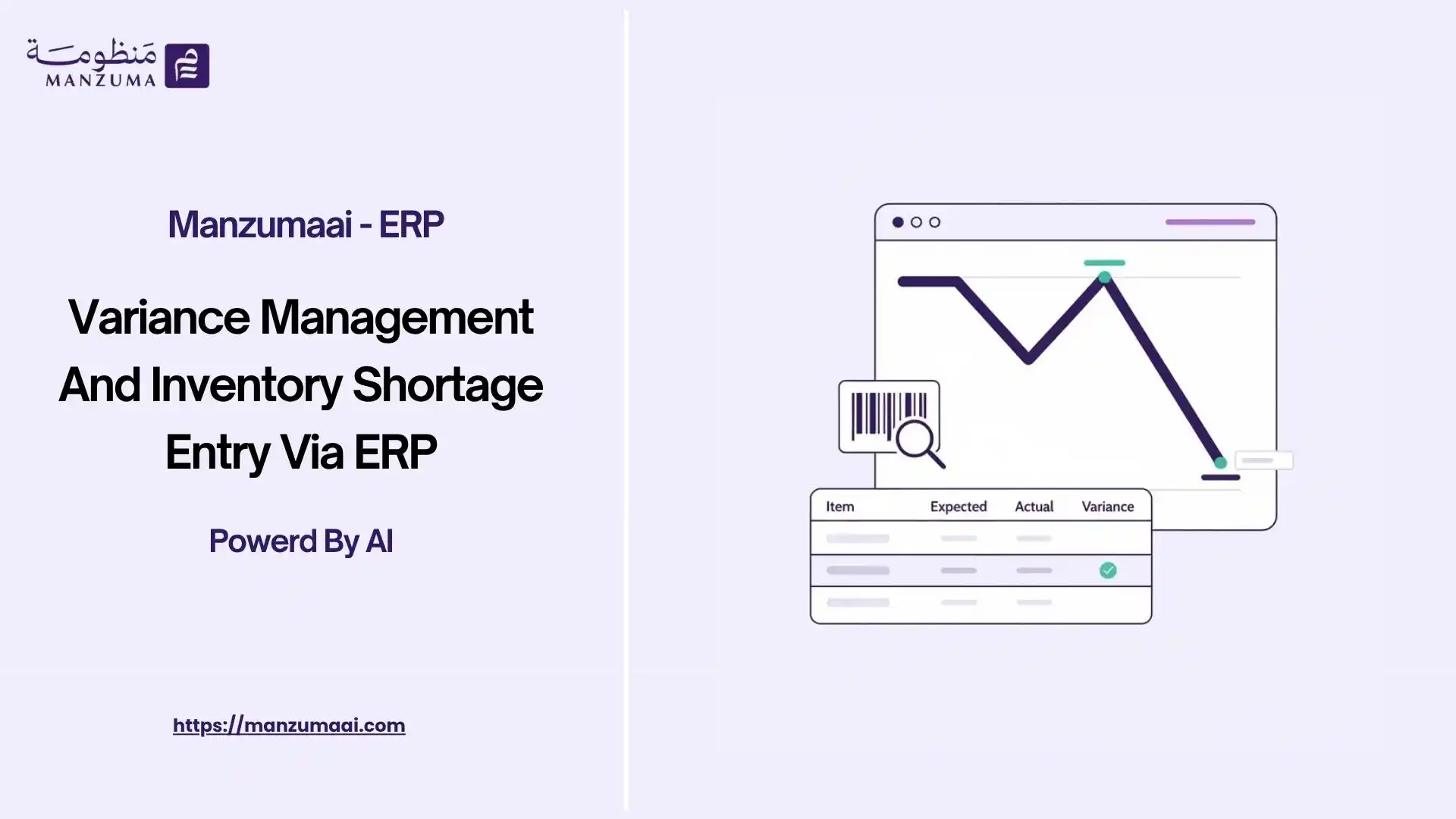
Comparing physical inventory against system records helps identify discrepancies investigate operational issues and improve inventory accuracy over time.
Integrated ERP platforms simplify reconciliation by maintaining complete transaction histories for every inventory movement.
Intelligent Inventory Reporting
Inventory data becomes valuable only when it supports better business decisions.
Modern inventory software automatically generates reports that provide visibility into:
- Inventory valuation.
- Stock movement.
- Slow-moving products.
- Fast-selling items.
- Warehouse utilization.
- Inventory turnover.
- Purchasing performance.
Instead of manually preparing spreadsheets, decision-makers receive accurate reports in real time.
How to Choose the Right Inventory Management Software
Choosing inventory software isn't about finding the platform with the longest feature list.
It's about selecting a solution that aligns with your operational workflows, business goals, and future growth.
The right system should improve efficiency without adding unnecessary complexity.
Scalability
Your inventory management system should grow alongside your business.
Whether you expand product lines, open additional warehouses, or increase transaction volumes the software should continue supporting your operations without requiring costly replacements.
Ease of Use
Technology should simplify work—not complicate it.
An intuitive user interface reduces employee training time while improving system adoption across departments.
The easier the software is to use the faster teams become productive.
ERP Integration
Inventory cannot operate independently.
A modern inventory solution should integrate seamlessly with:
- Accounting.
- Procurement.
- Sales.
- CRM.
- Point of Sale (POS).
- Finance.
- Business Intelligence.
Connected systems eliminate duplicate data entry while improving operational consistency.
Reporting and Business Analytics
Access to accurate business information is essential for informed decision-making.
Look for software that provides:
- Interactive dashboards.
- Inventory KPIs.
- Purchasing analytics.
- Inventory valuation reports.
- Warehouse performance metrics.
- Executive reports.
Real-time analytics allow managers to identify opportunities before they become problems.
Cloud Accessibility
Business doesn't stop when employees leave the office.
Cloud ERP software enables authorized users to access inventory information securely from anywhere while ensuring automatic backups and continuous system availability.
Why Businesses Choose AI Manzuma for Inventory Management
Managing inventory manually may work for small operations but growing businesses require far greater visibility automation and control.
AI Manzuma combines cloud ERP technology with artificial intelligence to simplify inventory management while connecting every operational department through one intelligent platform.
Instead of operating multiple disconnected systems, businesses manage inventory, procurement, accounting, finance, and sales from one centralized solution.
Key Inventory Management Features in AI Manzuma
AI Manzuma helps organizations modernize warehouse operations through intelligent automation and real-time business visibility.
Core capabilities include:
Live Inventory Monitoring
Track inventory levels across one or multiple warehouses with automatic stock updates after every transaction.
Procurement Integration
Connect purchasing activities directly with inventory to ensure stock levels purchase orders and financial records remain synchronized.
Smart Inventory Alerts
Receive automatic notifications when inventory reaches predefined minimum levels allowing procurement teams to replenish stock before shortages occur.
Leverage AI-powered assistance to generate reports, analyze inventory trends, answer operational questions, and retrieve business insights instantly using natural language.
Executive Dashboards
Monitor inventory performance, purchasing activities, warehouse efficiency, and operational KPIs through interactive dashboards updated in real time.
Secure Cloud ERP Platform
Access inventory information anytime through a secure cloud environment with advanced user permissions automatic backups and enterprise-grade data protection.
Unlike traditional inventory software AI Manzuma doesn't simply record inventory transactions—it transforms operational data into actionable business intelligence that helps organizations reduce costs improve warehouse efficiency and make faster data-driven decisions.
Transform Inventory Data into Business Intelligence
Inventory data is only valuable when it helps leaders make smarter decisions.
Many businesses generate thousands of inventory transactions every month but struggle to convert that information into actionable insights. Static spreadsheets and manual reports often fail to provide the visibility required for proactive inventory planning.
AI Manzuma bridges this gap by transforming operational data into meaningful business intelligence through real-time dashboards AI-powered analytics and automated reporting.
Instead of spending hours compiling reports, executives gain instant access to the metrics that drive operational performance.
Use Artificial Intelligence to Optimize Inventory Decisions
Managing inventory manually often leads to reactive decision-making.
Businesses frequently discover stock shortages, slow-moving inventory, or purchasing inefficiencies only after they begin affecting operations.
AI Manzuma uses artificial intelligence to continuously analyze inventory activity helping organizations anticipate challenges before they impact profitability.
With AI-powered inventory management businesses can:
- Forecast future inventory demand.
- Detect unusual inventory movements.
- Identify slow-moving and obsolete stock.
- Recommend optimal reorder quantities.
- Reduce inventory carrying costs.
- Improve warehouse utilization.
- Support smarter procurement planning.
By replacing guesswork with predictive insights, organizations can improve inventory accuracy while reducing unnecessary operational expenses.
Streamline Procurement with Intelligent Inventory Automation
Inventory and procurement should never operate as separate processes.
Every purchasing decision directly affects stock availability, cash flow, supplier relationships, and warehouse capacity.
AI Manzuma connects procurement with inventory management to automate the purchasing lifecycle from request to receipt.
Businesses can:
- Create purchase requests automatically based on inventory thresholds.
- Generate purchase orders with minimal manual input.
- Monitor supplier delivery performance.
- Track purchase order status in real time.
- Match received inventory with supplier invoices.
- Improve purchasing accuracy across multiple warehouses.
This integrated workflow reduces procurement delays while ensuring inventory remains aligned with actual business demand.
Improve Warehouse Productivity Through Automation
Efficient warehouse operations depend on speed, accuracy, and complete inventory visibility.
Manual inventory processes often result in misplaced products, delayed fulfillment, duplicate work, and inconsistent stock records.
AI Manzuma helps warehouse teams automate routine activities while maintaining accurate inventory data across every location.
Warehouse managers can:
- Track inventory movements instantly.
- Monitor transfers between warehouses.
- Simplify receiving and dispatch operations.
- Reduce picking and packing errors.
- Improve inventory traceability.
- Accelerate order fulfillment.
The result is a more efficient warehouse operation that supports both customer satisfaction and business growth.
Gain Complete Visibility Across Every Warehouse
Businesses operating multiple warehouses often struggle to maintain consistent inventory information across locations.
AI Manzuma centralizes warehouse operations within a single ERP environment allowing organizations to monitor inventory across all facilities from one unified dashboard.
Real-time visibility enables decision-makers to:
- Compare inventory levels between warehouses.
- Balance stock across locations.
- Reduce unnecessary inventory transfers.
- Improve inventory allocation.
- Monitor warehouse performance.
- Optimize distribution efficiency.
Whether managing one warehouse or an enterprise-wide distribution network, businesses maintain complete operational transparency.
Why AI Manzuma Is More Than Inventory Software
Inventory management is only one component of a successful business operation.
AI Manzuma combines inventory management with every core business function to create a fully integrated ERP ecosystem.
Beyond inventory organizations can manage:
- Financial accounting.
- Procurement.
- Sales.
- Customer Relationship Management (CRM).
- Human Resources & Payroll.
- Business Intelligence.
Executive Dashboards
- Multi-Branch Operations.
- AI-Powered Analytics.
This connected environment eliminates data silos while enabling every department to work from the same reliable information.
Industries Served by Manzuma AI for Inventory Management
Inventory management needs vary from one industry to another. A trading and distribution company has different requirements from a manufacturing facility or a restaurant. Manzuma AI helps businesses manage inventory according to their specific operational needs by connecting inventory with sales, purchasing, warehouses, POS, and accounting through a single cloud-based ERP system.
Some of the key industries that can benefit from Manzuma AI’s inventory management solutions include:
- Trading and Distribution : Track stock levels and product movements across branches and warehouses while connecting sales and purchasing activities to inventory for better visibility into available quantities.
- Manufacturing : Manage raw materials and Bills of Materials (BOM), monitor production requirements and inventory movements, and connect manufacturing operations with inventory.
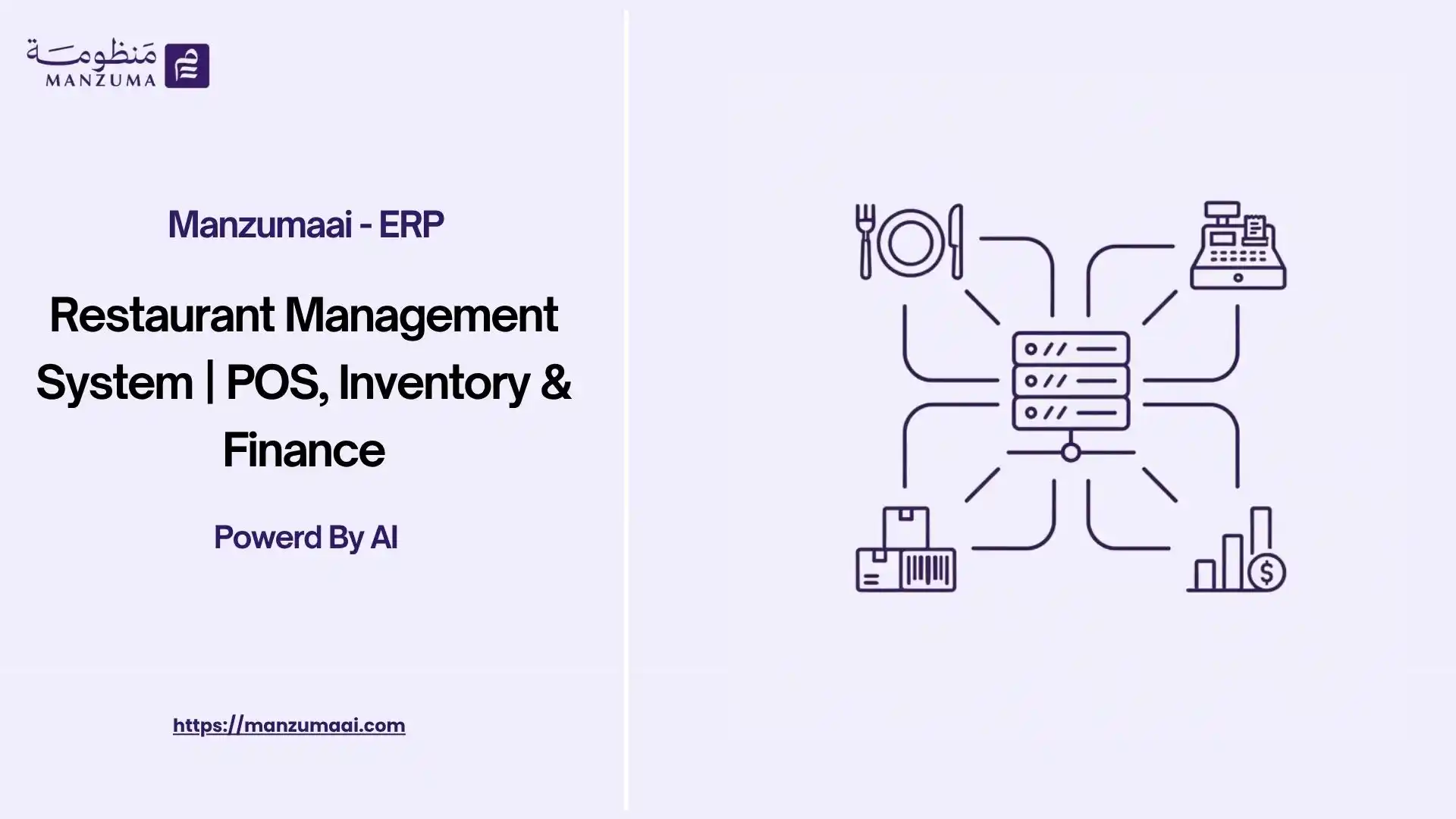
- Restaurants and Hospitality : Monitor ingredients, products, and supplies while integrating POS operations with inventory to keep stock levels updated as sales are processed.
- Construction and Contracting : Organize material movements and project-related purchasing while managing inventory and financial data within one integrated system.
- Healthcare : Organize medical supplies and inventory items, track stock levels and movements, and improve inventory control to help reduce discrepancies.
- Services : Manage the products and supplies required for daily operations while connecting inventory movements with purchasing, expenses, and other business processes.
Manzuma AI also supports multiple warehouses and branches, inter-branch stock transfers, low-stock alerts, stocktaking, and inventory adjustments. It keeps inventory records updated and connected with accounting and purchasing, helping businesses maintain more organized and accurate stock data.
Instead of managing inventory through disconnected systems, Manzuma AI connects stock movements with related business operations, giving companies more integrated data to support purchasing, storage, and sales decisions.
Future-Proof Your Inventory Operations
As supply chains become increasingly complex businesses require technology that can adapt to changing customer demands, evolving market conditions, and organizational growth.
AI Manzuma provides the flexibility, automation, and intelligence needed to manage inventory efficiently today while preparing for tomorrow's challenges.
Whether you're expanding into new markets opening additional warehouses or scaling operations the platform grows with your business—without increasing operational complexity.
Ready to Modernize Your Inventory Management?
If your organization still relies on spreadsheets or disconnected inventory systems, now is the time to embrace a smarter approach.
AI Manzuma helps businesses automate inventory management, streamline procurement, improve warehouse efficiency, and gain real-time visibility into every aspect of inventory performance.
With one intelligent ERP platform your team can reduce costs, improve operational accuracy, and make faster data-driven decisions.
Contact Us & Schedule a personalized demo today and discover how AI Manzuma can transform your inventory management strategy.
FAQs
What is inventory management software?
Inventory management software helps businesses monitor stock levels track inventory movement manage warehouse operations and optimize purchasing decisions through one centralized system.
How does AI Manzuma improve inventory management?
AI Manzuma combines inventory management, procurement, accounting, sales, and AI-powered analytics within a single ERP platform providing real-time visibility and intelligent automation.
Can AI Manzuma manage multiple warehouses?
Yes. The platform supports multi-warehouse operations allowing businesses to monitor inventory transfers and warehouse performance from one centralized dashboard.
Does AI Manzuma support automated inventory replenishment?
Yes. Businesses can configure inventory thresholds that automatically trigger purchasing workflows and replenishment recommendations based on current stock levels.
Is AI Manzuma suitable for growing businesses?
Absolutely. AI Manzuma is designed for scalability enabling organizations to expand warehouses, product catalogs, and operational workflows without changing systems.
Ready to Organize Your Business?
Try Manzuma free for 14 days — no credit card, no commitment.